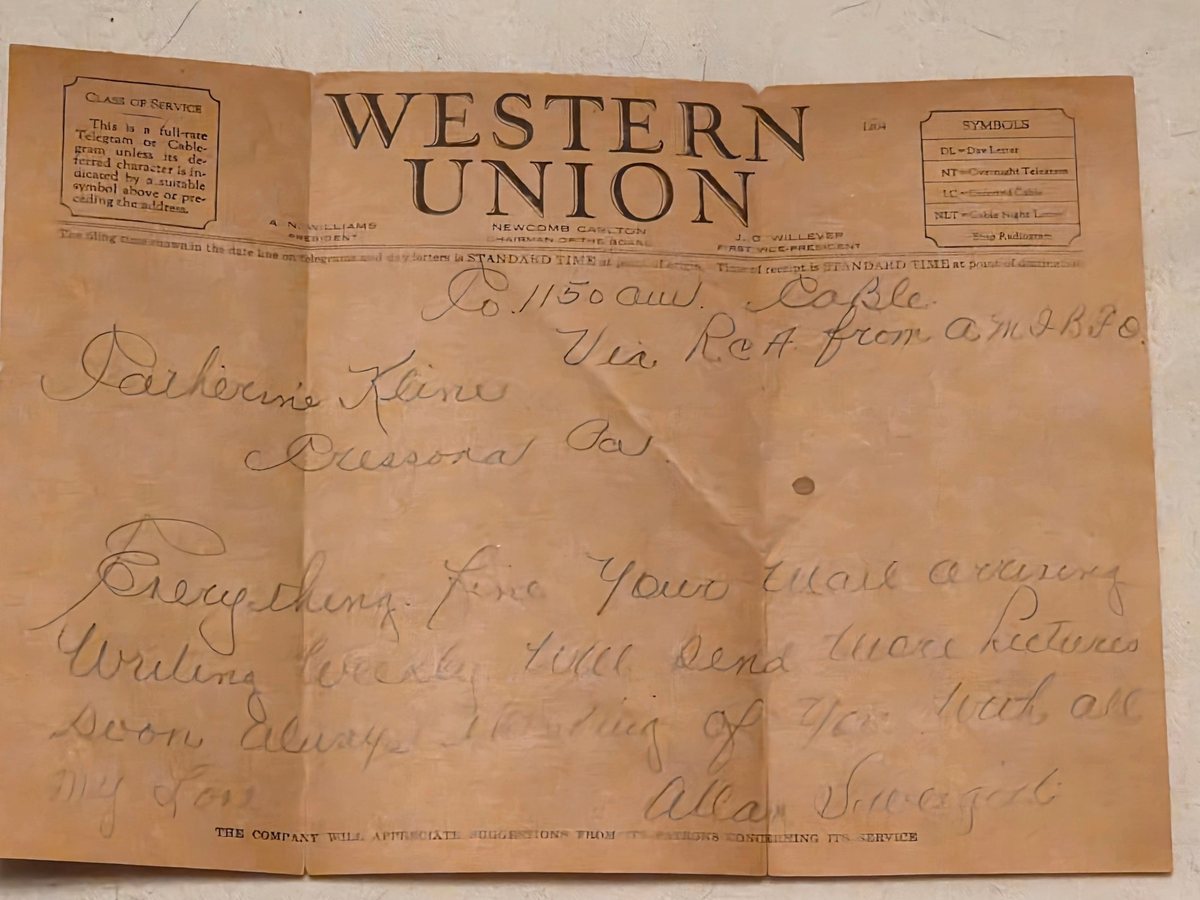
Through nearly three years overseas, Allen and Catherine — not yet married, still Catherine Kline of Cressona — kept in touch by mail and, when a letter was too slow, by cable. This telegram, sent via RCA from his Army Post Office overseas, is one that survives.
Western Union cablegram, Allan Sweigert to Catherine Kline, Cressona, Pa., sent via RCA from his overseas Army Post Office.
“Everything fine. Your mail arriving. Writing weekly. Will send more pictures soon. Always thinking of you, with all my love.”
Allan Sweigert, Telegram To Catherine
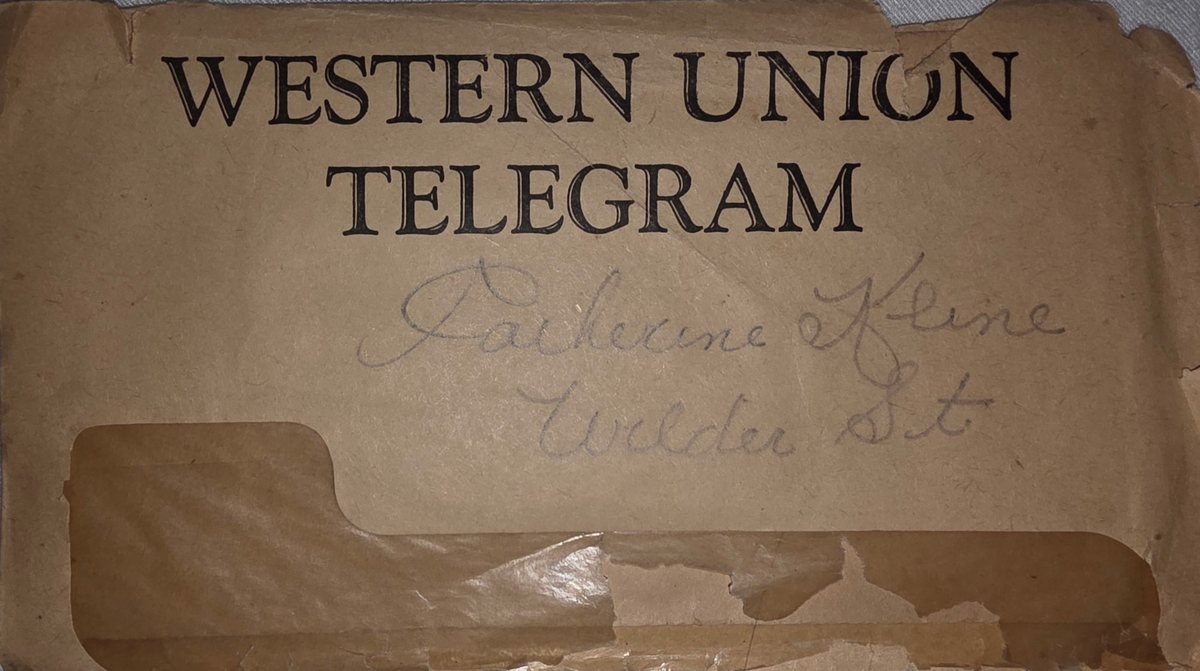
The telegram's delivery envelope, addressed to Catherine Kline, Cressona, Pa.
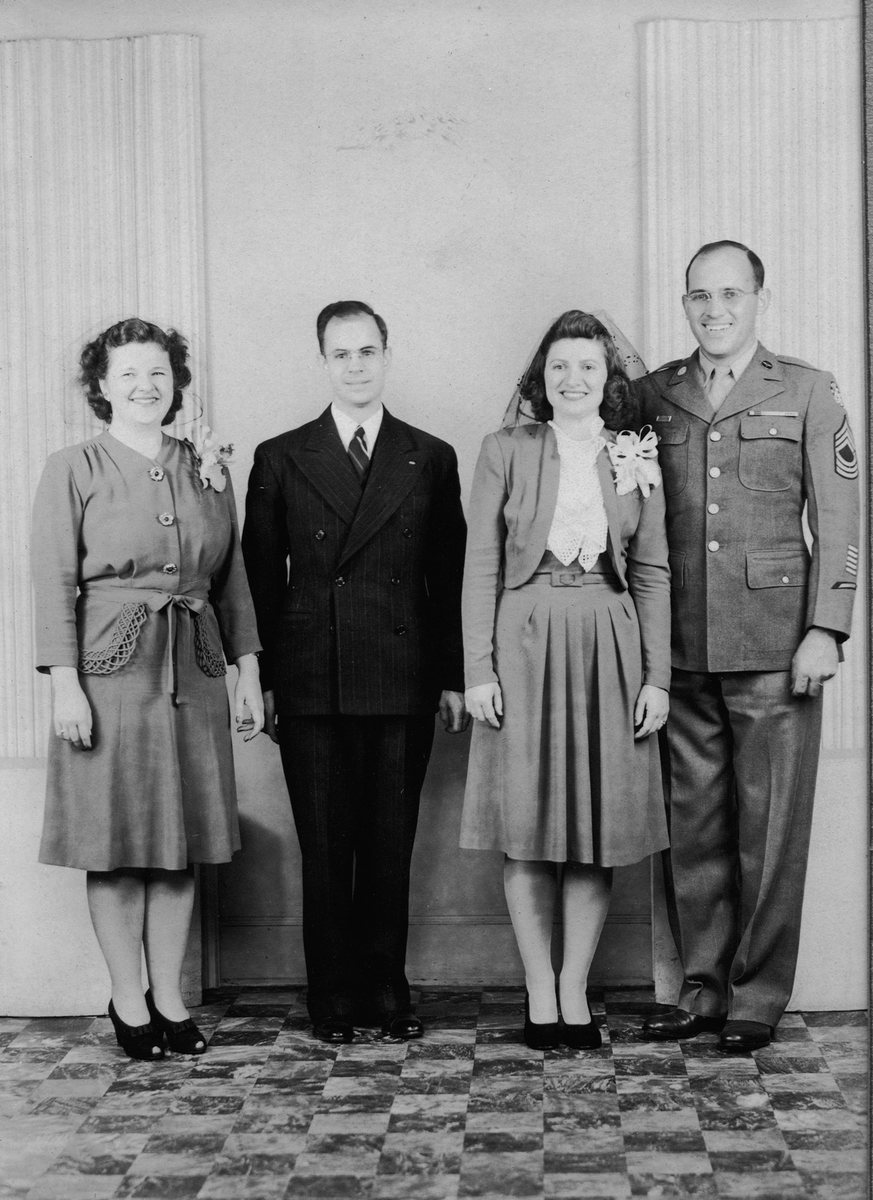
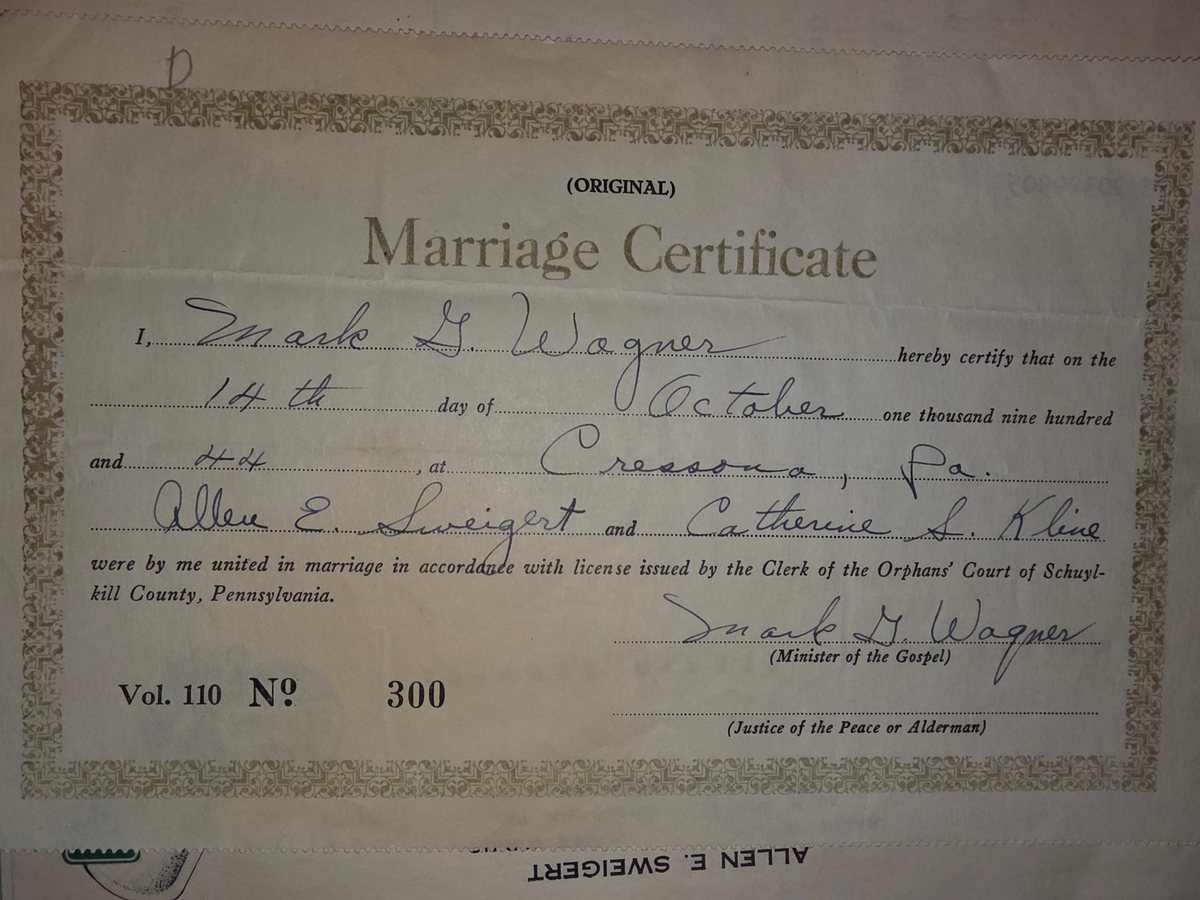
They married on October 14, 1944, a week after Allen came home. The Rev. Mark G. Wagner officiated, on a license issued by the Clerk of the Orphans' Court of Schuylkill County.
Allen and Catherine, their wedding portrait — his master sergeant's chevrons still on his sleeve, her veil and corsage just visible.
Allen E. Sweigert and Catherine S. Kline's original marriage certificate, October 14, 1944, Cressona, Pa.
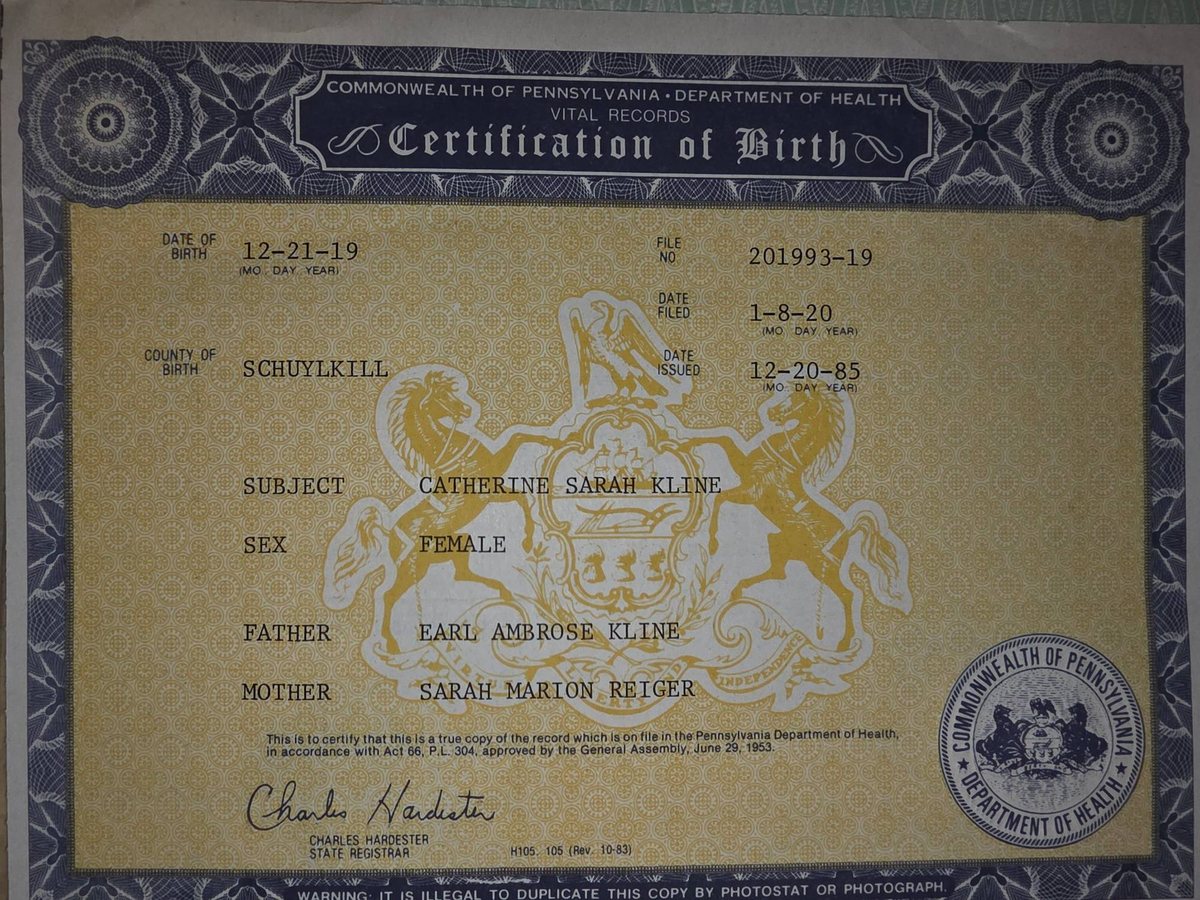
Catherine's own certification of birth: Catherine Sarah Kline, born December 21, 1919, Schuylkill County, to Earl Ambrose Kline and Sarah Marion Reiger.
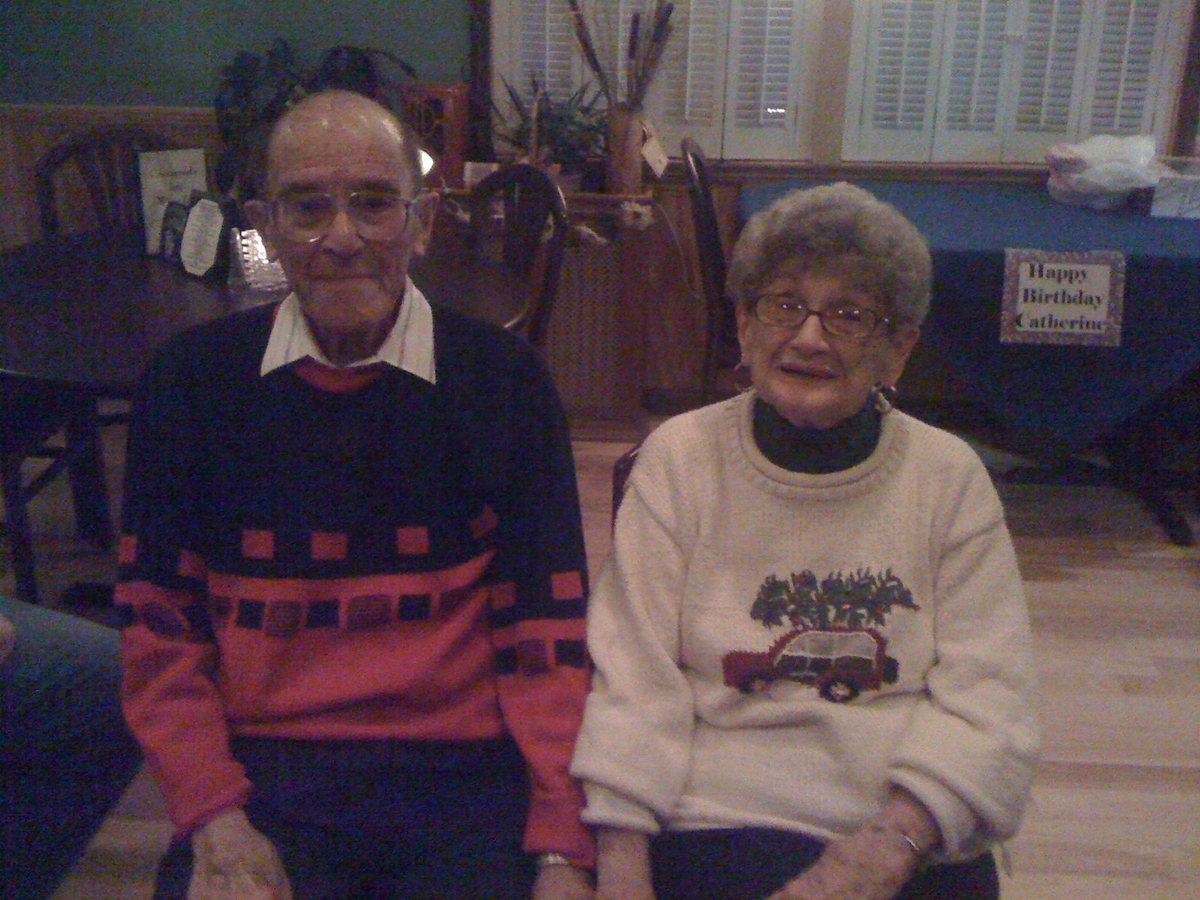
Allen and Catherine, decades later, at one of Catherine's birthdays — still together.
Before and After
How he came back: the Golden Gate to Fort Dix, September 1944 – 1946. His way home, drawn here for the first time.This drawing, set out in words
Angel Island in San Francisco Bay, where he landed in late September 1944. His foreign service ends on the 29th.
East across the country to Trenton, and home to Cressona, where he married Catherine on 14 October 1944.
Atlantic City, the redistribution station, in November.
DeRidder, Louisiana, with the 399th Fighter Squadron from 16 November 1944.
Stuttgart, Arkansas, from about February 1945.
Fort Dix, New Jersey, where he was separated on 8 June 1945.
Chicago, for the Coyne Electrical School, in 1946.
A filled disc marks a place he is documented to have been. An open square marks a place documented for his unit rather than for him. An open square with a diagonal tick marks his own squadron. A dashed circle marks a place that is inferred rather than recorded.
A brass ring crossed by a bar marks a place he never stood on — a target, or somewhere his group went without him. Each carries the words HE WAS NOT THERE.
A solid line is a journey whose means of travel is recorded. A dashed line is a move that is documented while the means is not. A dotted line rests on his own account alone.
No drawing here works out a distance for you. His own “about 12,000 miles” already stands beside a measured 9,500 to 10,200, and a third figure, quietly arrived at, would only muddy the two that were honestly come by.
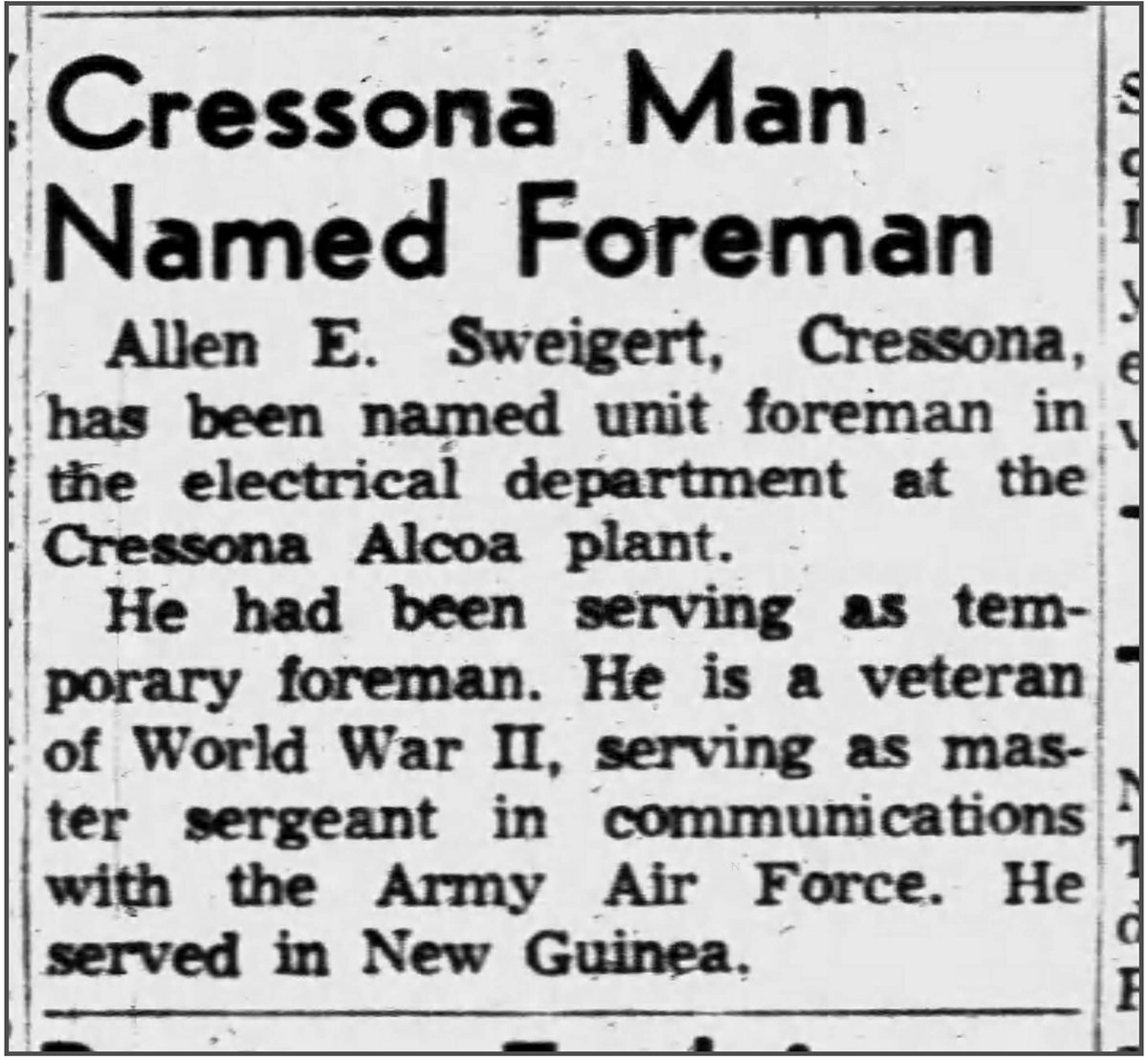
Pottsville Republican, Friday 31 January 1958. Four lines that put a date on the promotion. Credit: Pottsville Republican.
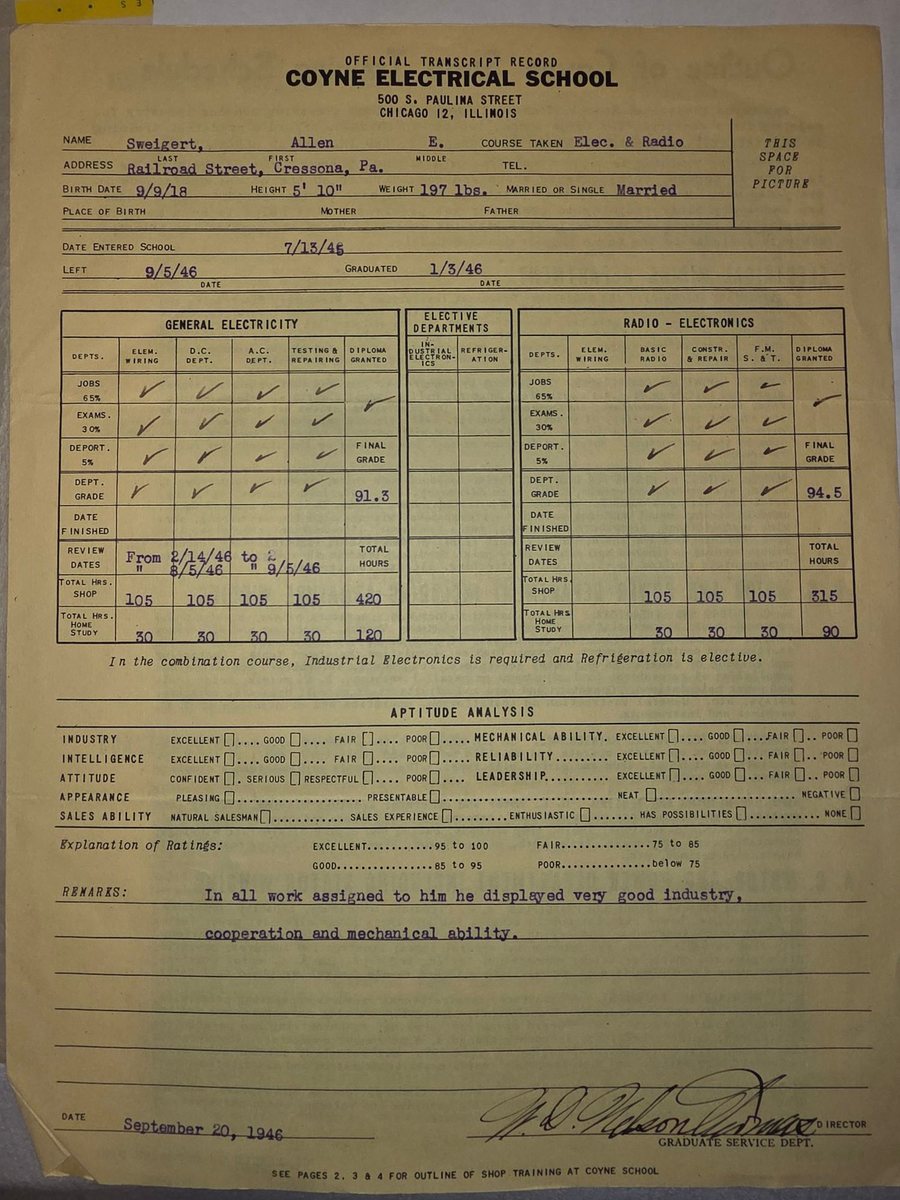
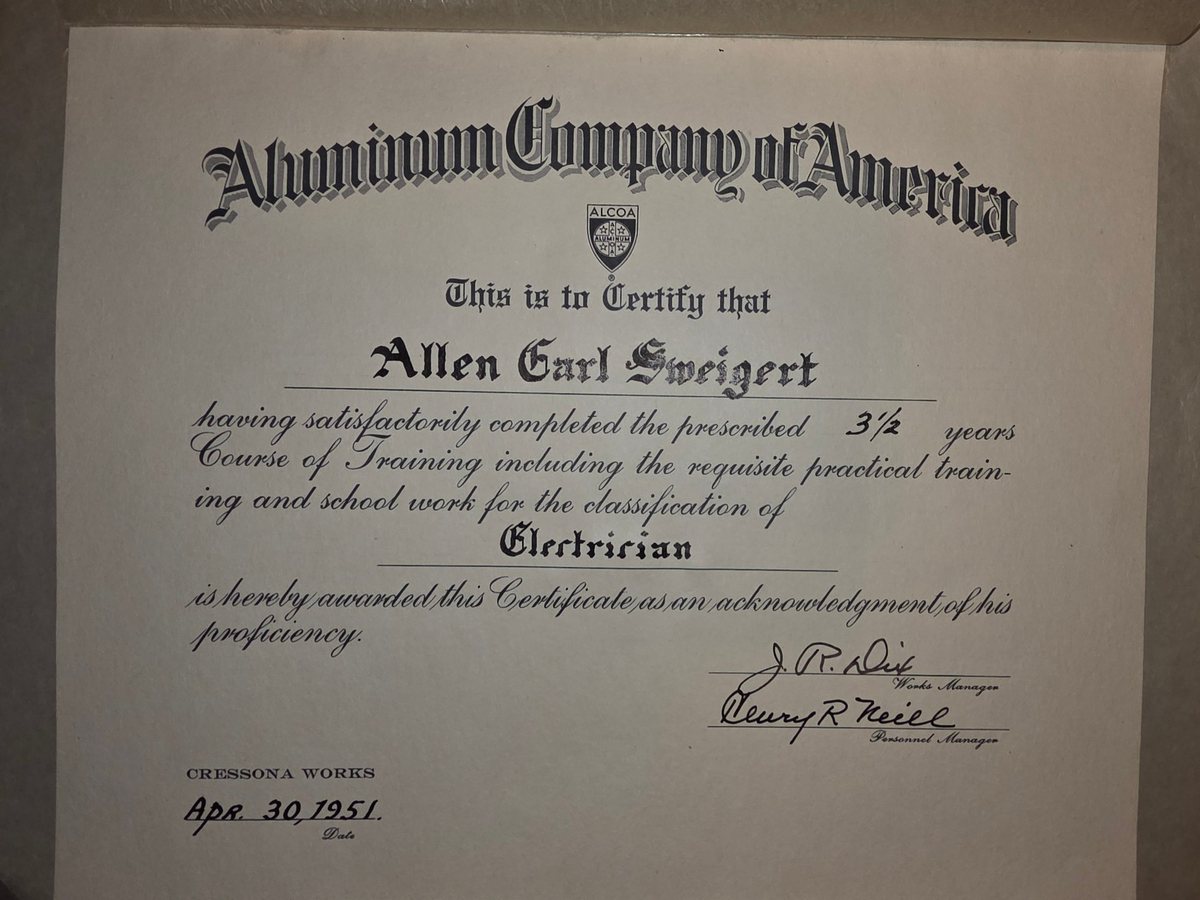
Radio operator training became a trade. After the war Allen finished Coyne Electrical School in Chicago, where his department grades were 91.3 in General Electricity and 94.5 in Radio-Electronics, and then came home and opened his own shop on Chestnut Street in Cressona, selling and repairing radios and electrical appliances. The rest of his working life went to Alcoa, where he was certified as an electrician in 1951 after the prescribed 3½-year course of training.
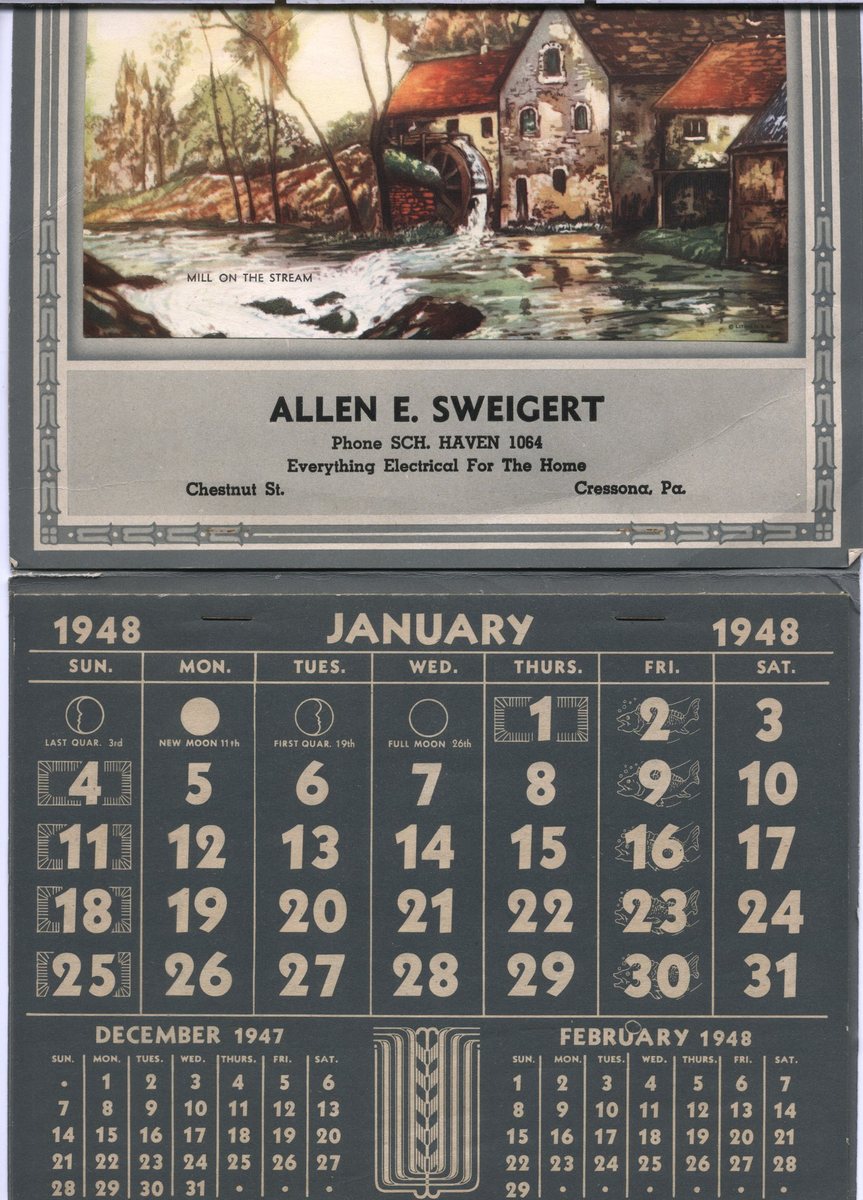
A 1948 advertising calendar for Allen's shop.
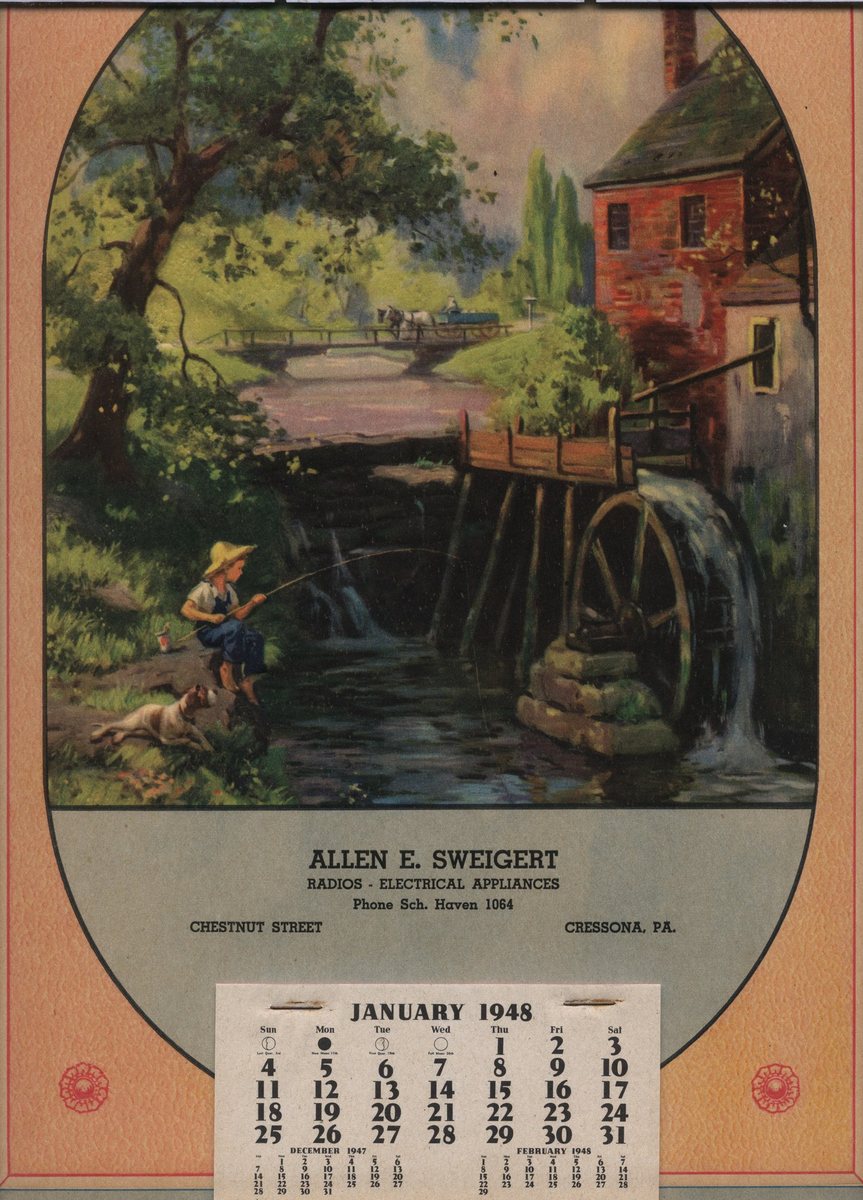
A second 1948 calendar: “Allen E. Sweigert, Radios - Electrical Appliances, Chestnut Street, Cressona, Pa.”
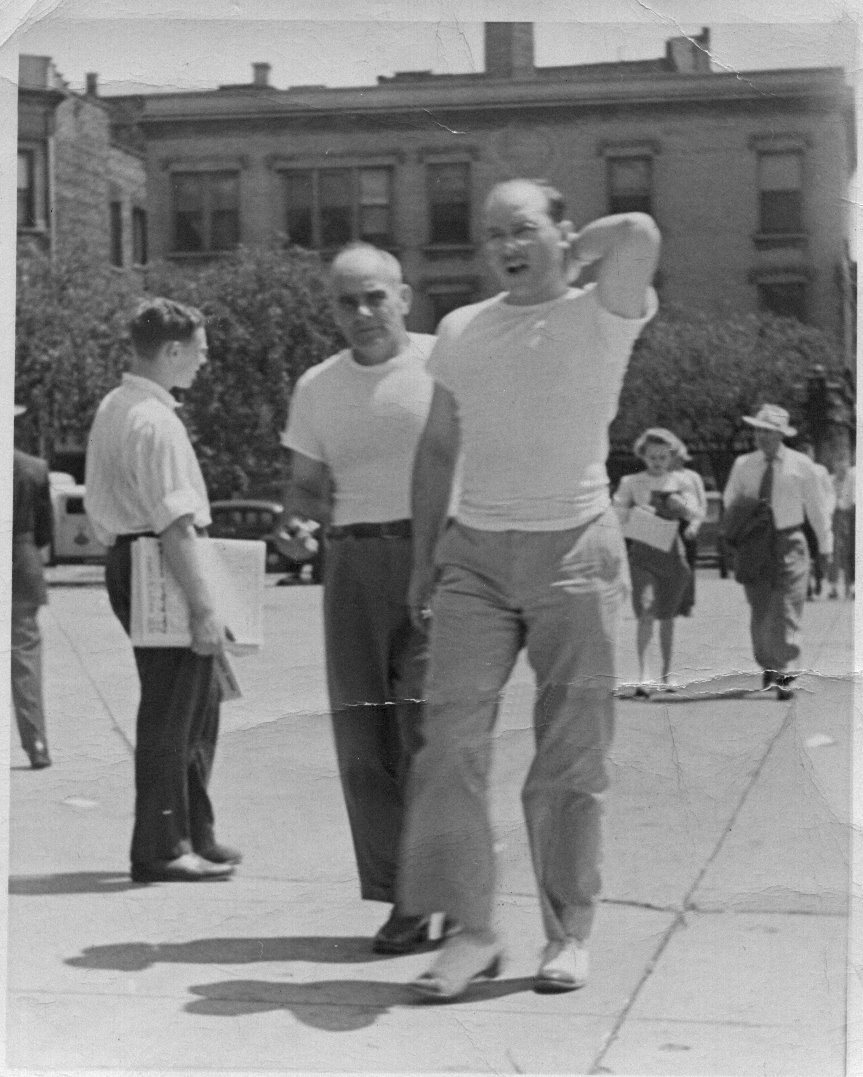
Allen and his father, Earl J. Sweigert, on a Chicago street, 1945 — while Allen attended Coyne Electrical School.
His official Coyne Electrical School transcript, Chicago — graduated January 1946; instructor's remark: “In all work assigned to him he displayed very good industry, cooperation and mechanical ability.”
His Alcoa electrician's certificate, Cressona Works, April 30, 1951.
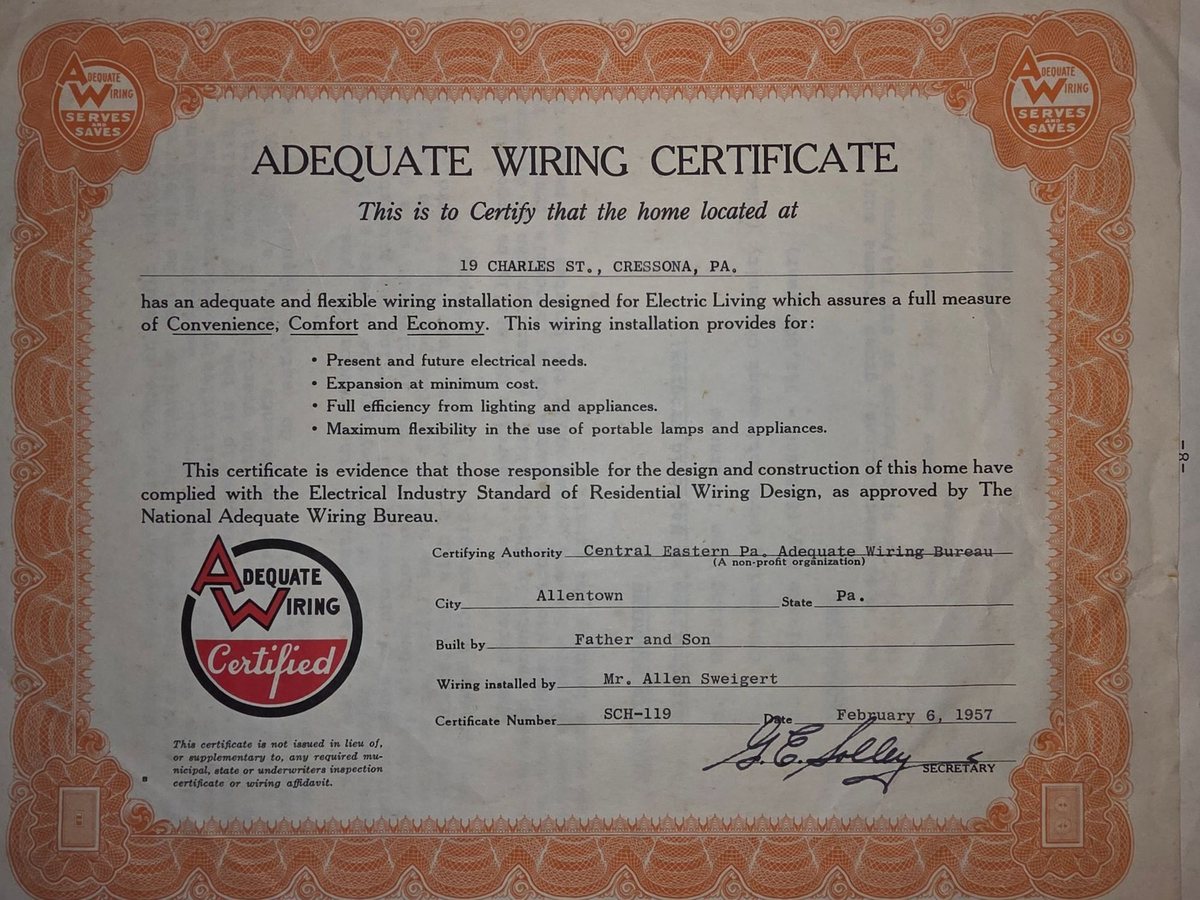
An Adequate Wiring Certificate for the Sweigert home on Charles Street, Cressona, 1957 — built by “Father and Son,” wiring installed by Mr. Allen Sweigert himself.
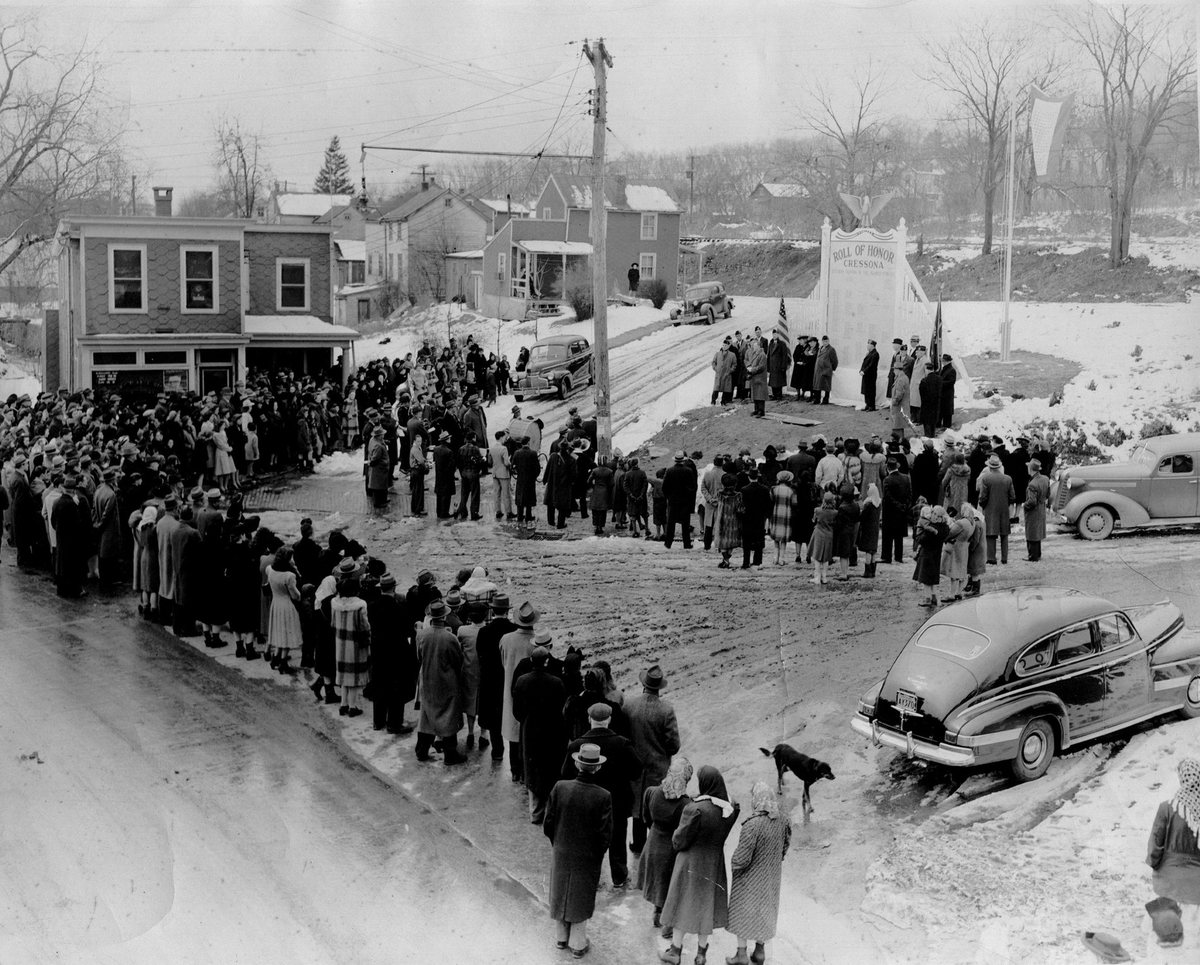
The 1943 dedication of the Roll of Honor, Cressona, Pennsylvania, honoring residents serving in the armed forces.
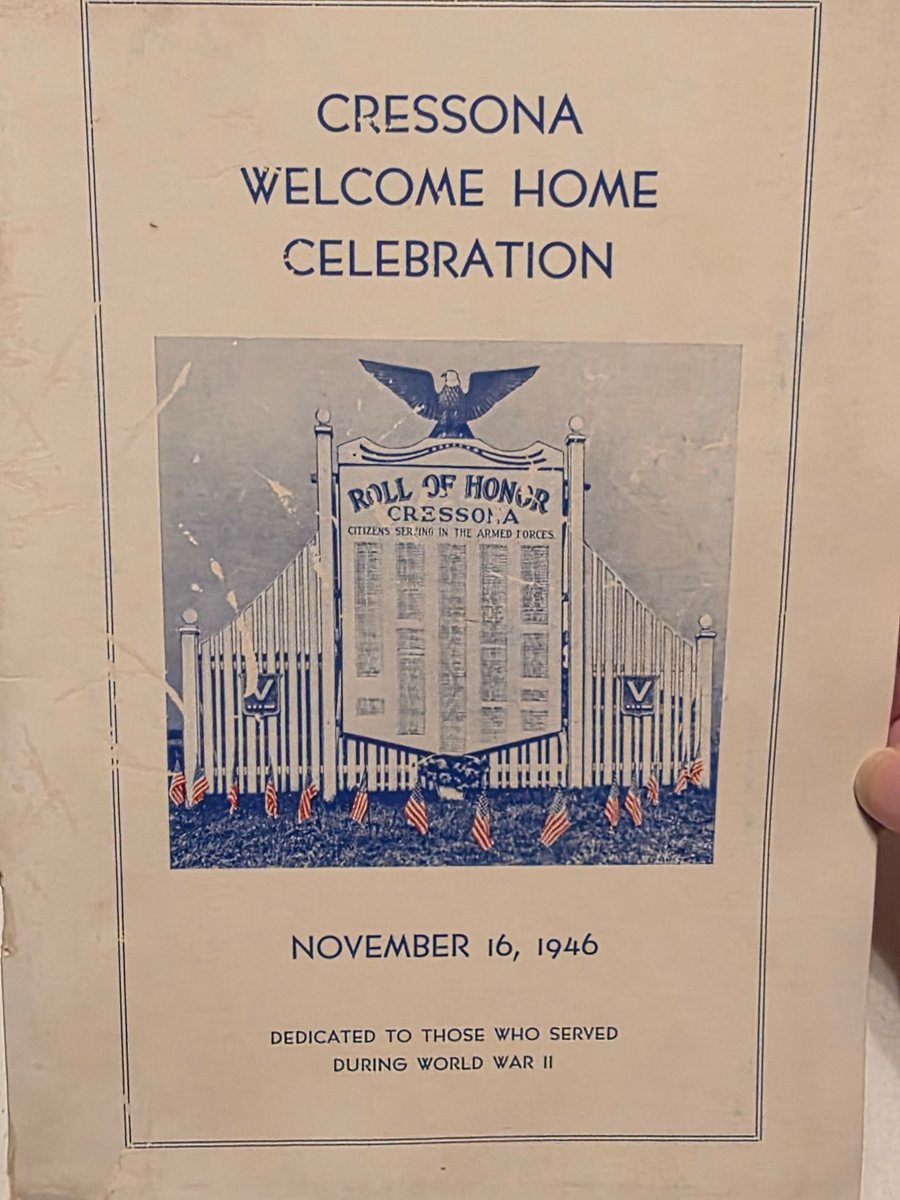
Program for the Cressona Welcome Home Celebration, November 16, 1946, “dedicated to those who served during World War II.”
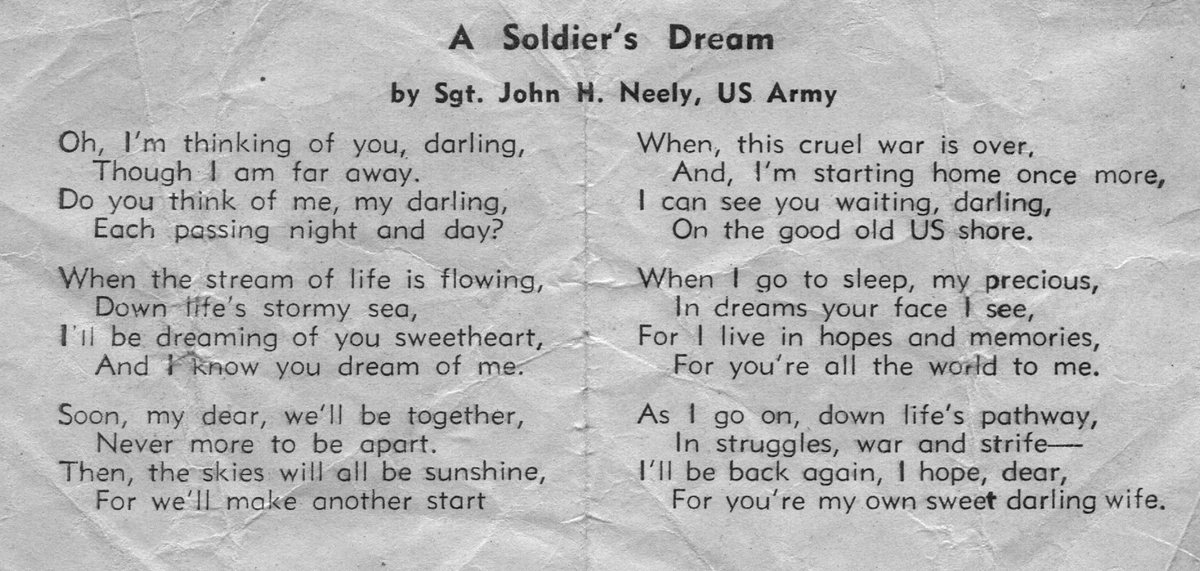
“A Soldier's Dream,” by Sgt. John H. Neely, U.S. Army — a wartime keepsake kept among Allen's things.
Courtship, College, and Home
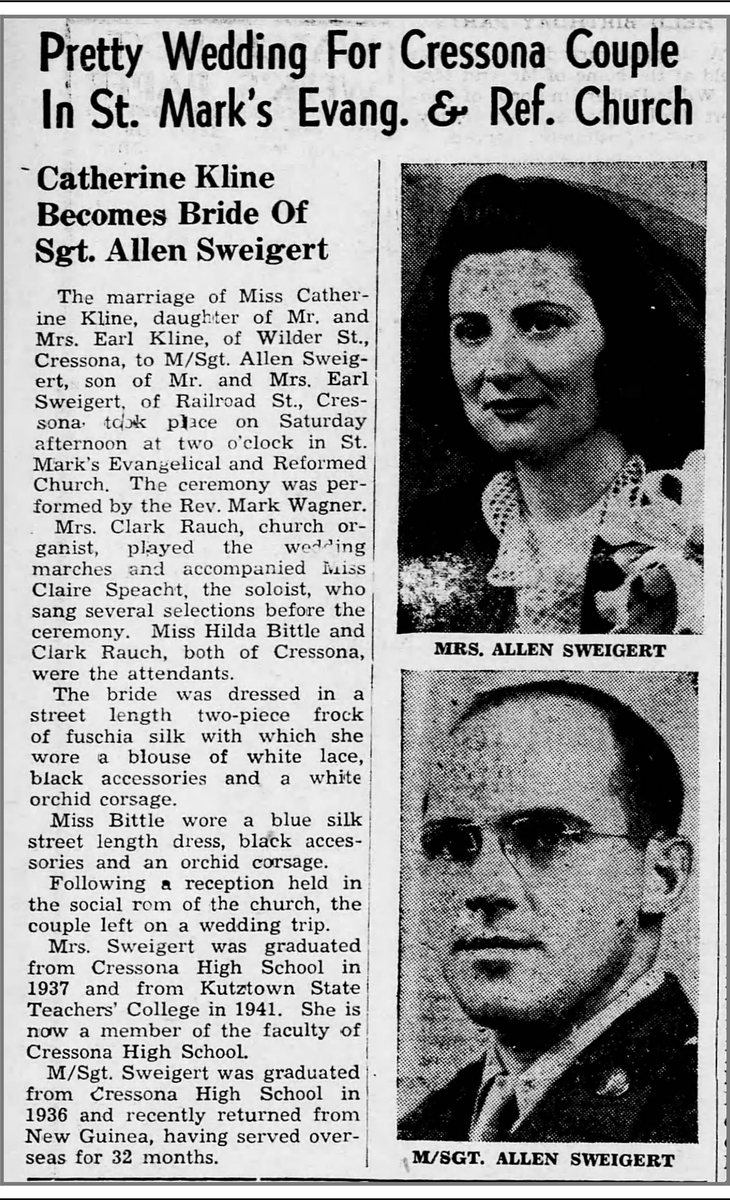
The Call, Schuylkill Haven, Friday 20 October 1944, page 4. The wedding was the Saturday before — 14 October, at two o’clock, in St. Mark’s Evangelical and Reformed Church, the Rev. Mark Wagner officiating. Credit: The Call, Schuylkill Haven.
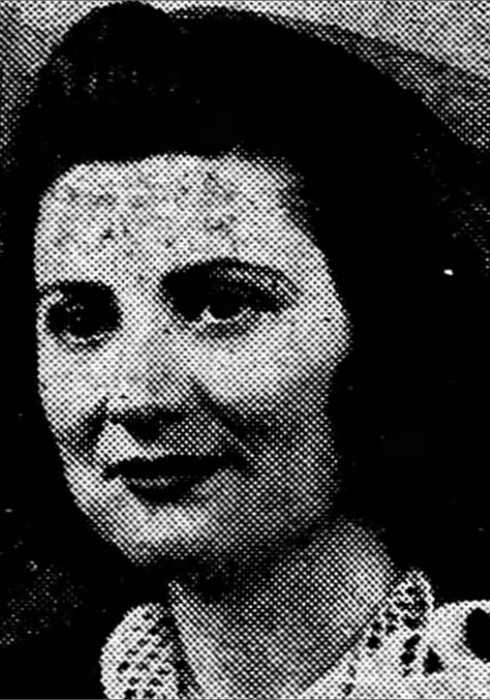
MRS. ALLEN SWEIGERT. Catherine, as the paper captioned her six days after the wedding.
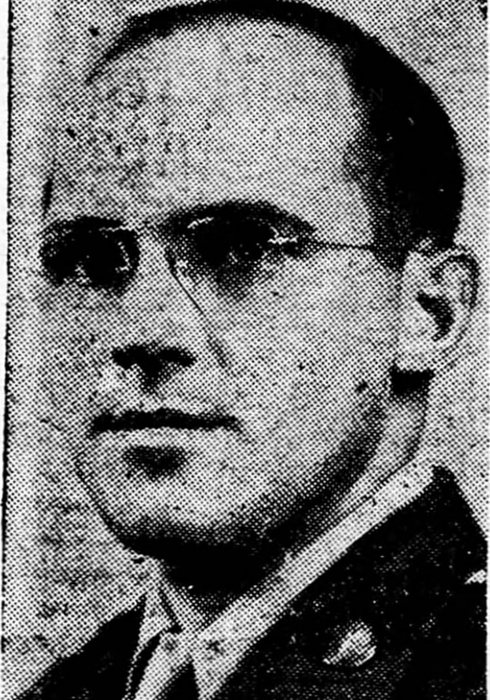
M/SGT. ALLEN SWEIGERT. Twenty-six, a master sergeant, three weeks home from New Guinea after thirty-two months overseas.
Catherine at Kutztown State Teachers College, and the family before and after the war.
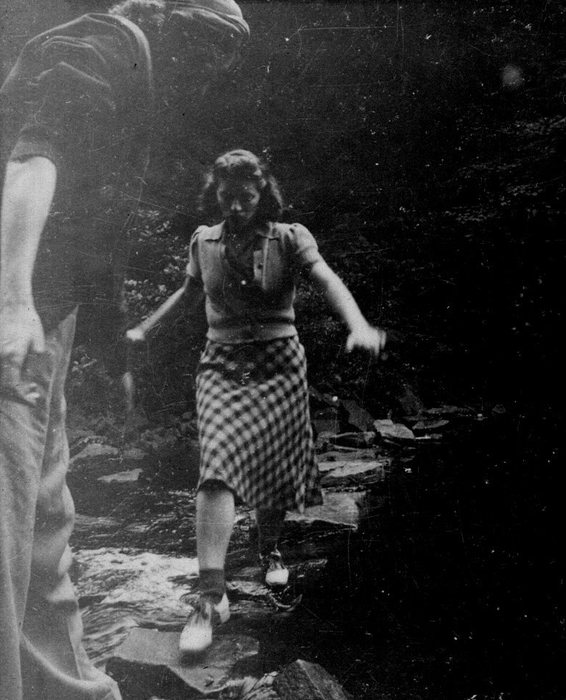
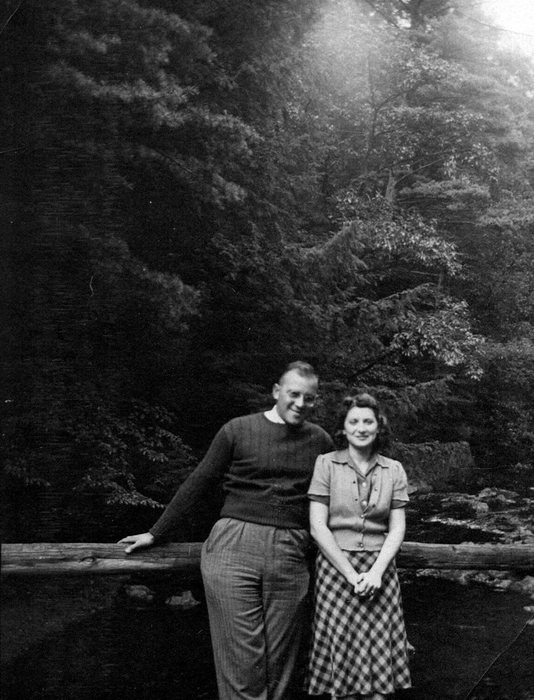
Allen and Catherine dating, before the war — she crosses a woodland stream on stepping stones.
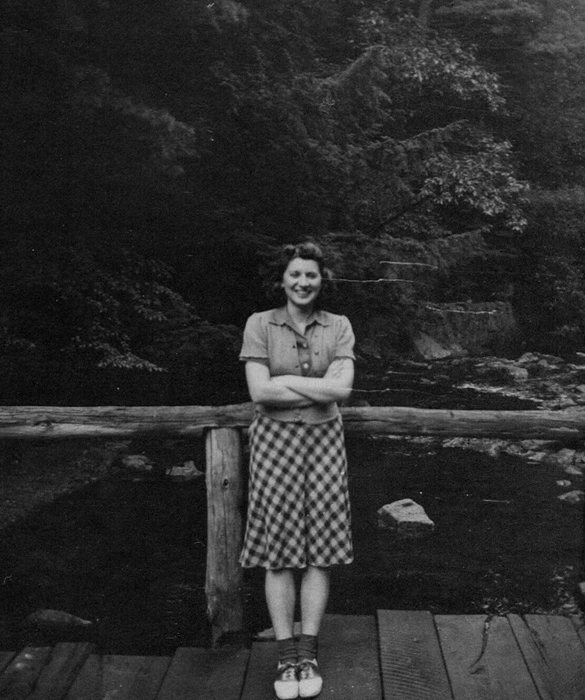
Catherine leans on a footbridge railing — Allen and Catherine dating, before the war.
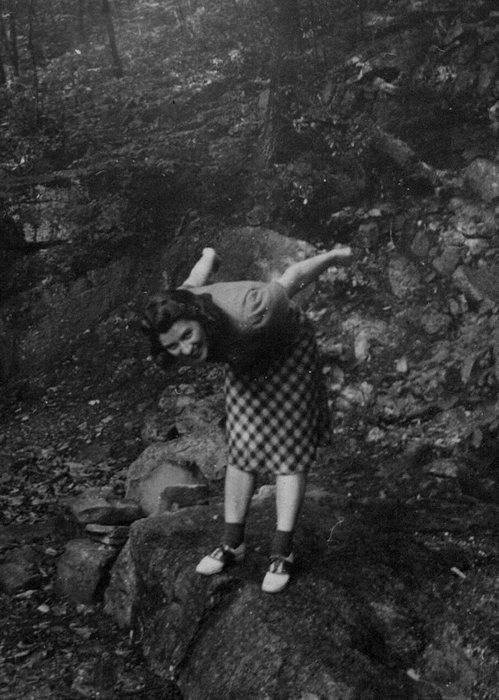
Catherine poses playfully on a boulder in the woods, the same outing.
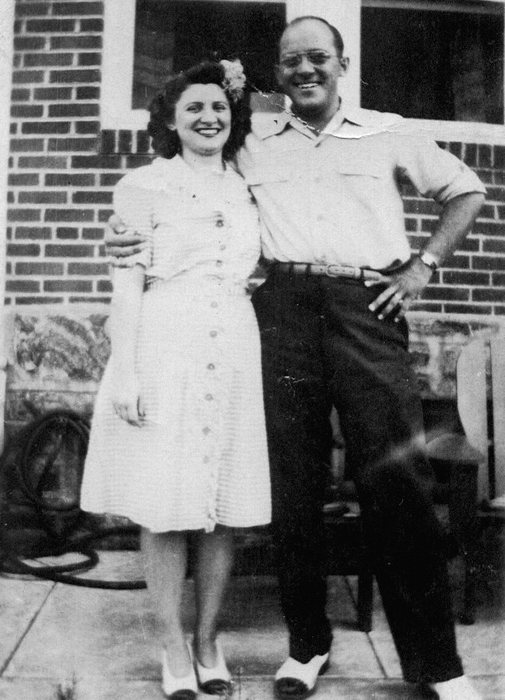
Allen and Catherine, arm in arm, both smiling broadly.
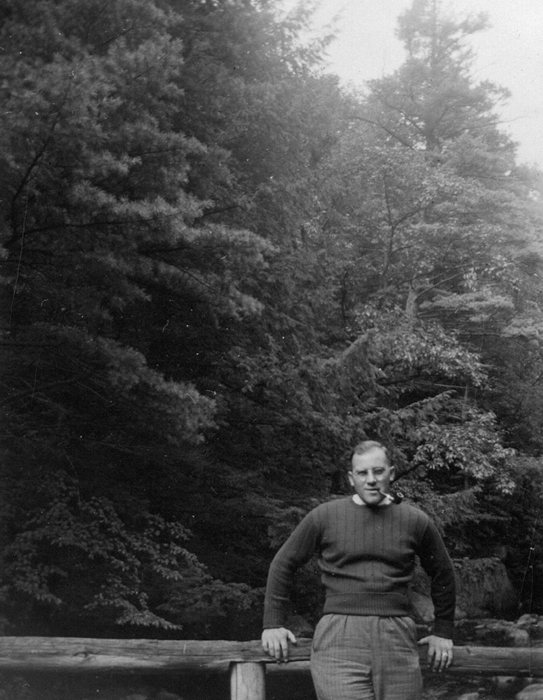
Allen leans on a wooden bridge railing, smoking a pipe — the same courtship-era outing.
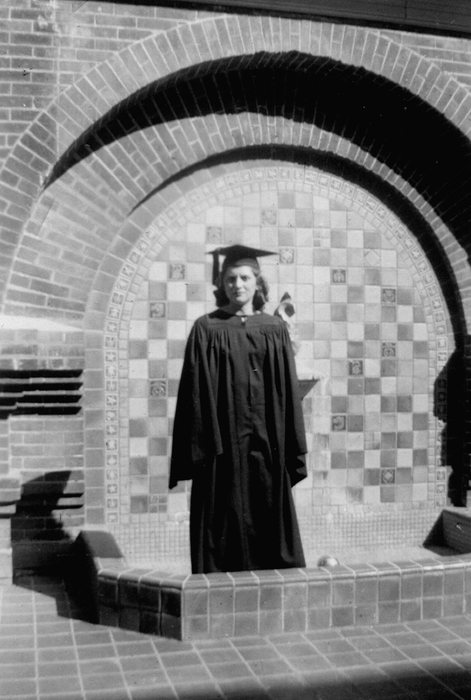
Catherine in cap and gown at her Kutztown State Teachers College graduation, 26 May 1941.
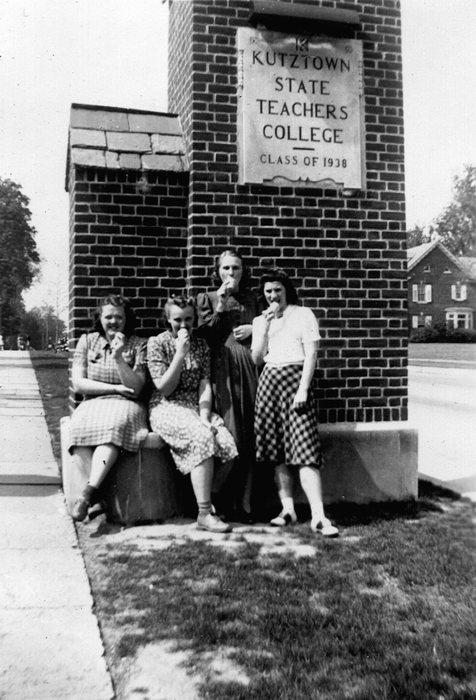
Catherine and friends beside a sign: “Kutztown State Teachers College, Class of 1938.”
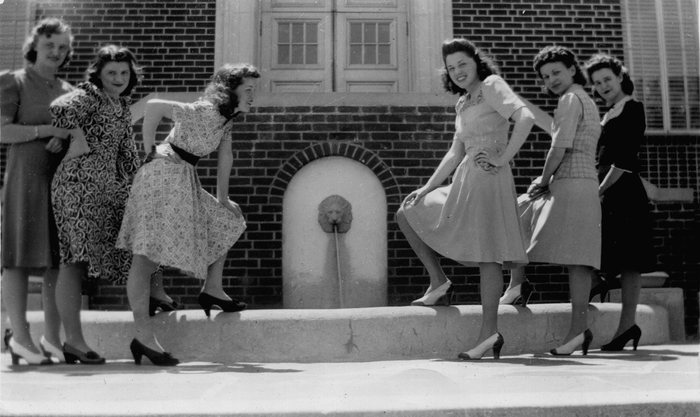
Catherine and college friends pose around a lion's-head fountain on campus.
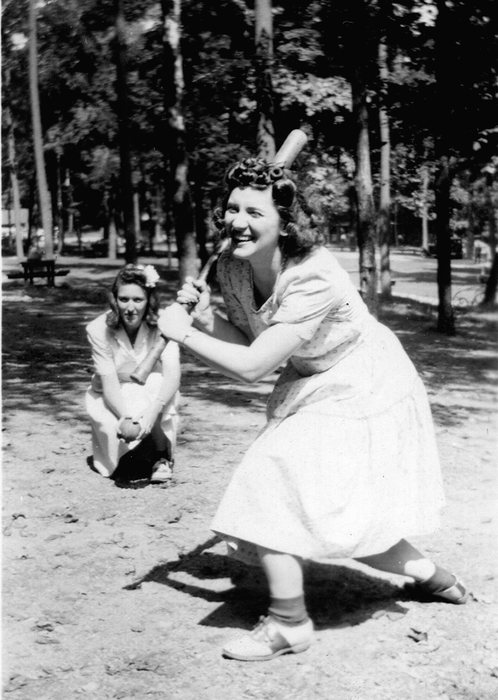
Catherine swings a bat playing ball with friends in a wooded park.
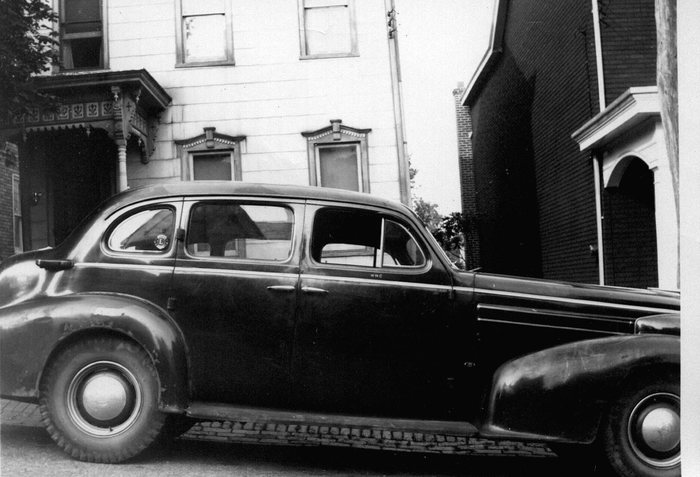
A 1930s sedan parked on a street of Victorian rowhouses.
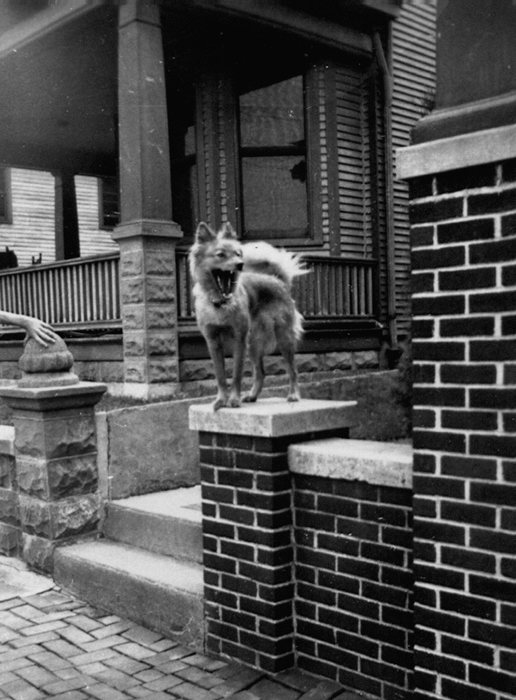
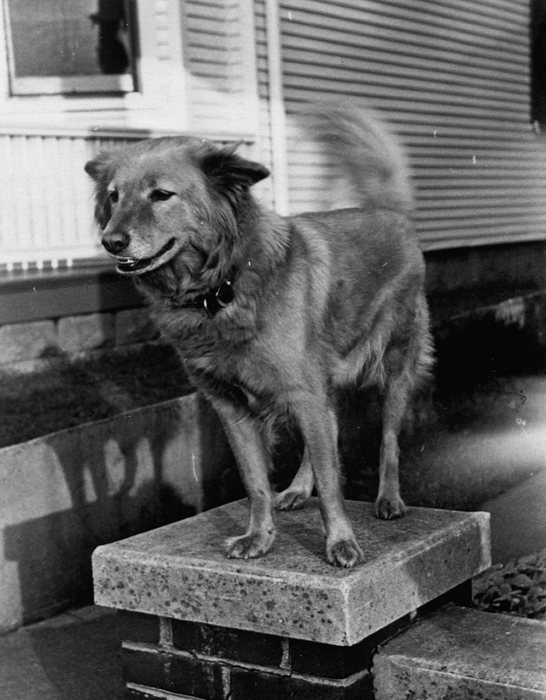
The family dog barks from atop a brick porch pier.
Catherine
Catherine sat for her own interview in 2013, recorded the same way as Allen's: a family member asking the questions, Catherine answering in her own words. Three passages from those recordings follow, chosen by the family.
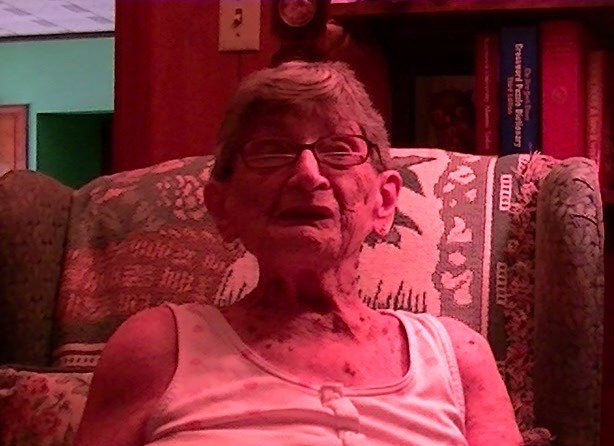
Catherine, mid-story, 2013 interview.
Kutztown State Teachers College
C
Catherine00:03
Yep. Hello, my name is Catherine Sarah Sweigert. My father's name was Earl Ambrose Kline, and my mother's name was Sarah Marion Reiger, and I was born on December the 21st, 1919, on Grove Street in Cressona, Pennsylvania. I have one, I had one sister, who was Betty Ann, and she married Harold Straub. I married Allen Sweigert on October the 14th, 1944.We had two boys, Allen Jr. and John.Allen was the son of Earl Joshua Sweigert and Helen Fessler.
J
Jeremy01:01
A little bit about your schooling, and then your full-time job.
C
Catherine01:10
I went to, uh, Cressona schools, uh, graduated from Cressona High School in 1937.And that fall, I went to Kutztown State College, and I was there for four years and received my Bachelor of Science degree with... with, uh, a major in Library Science and in Social Studies and a minor in English. I, uh, taught at Port Carbon High School for one year after I graduated. Then I came to Cressona for three years, and then I got married, and I had children, two boys, uh, and I didn't go back to school to teach again. Uh, and I didn't go back to school to teach again. Gee, I don't remember what year it was, but I was at Schuylkill Haven for thirteen years. Schuylkill Haven High School, where I was a high school librarian. Ah, that's about all I can tell ya.
J
Jeremy02:25
All right. Um, what year did you graduate Kutztown?
C
Catherine02:30
1941.
J
Jeremy02:33
Now, correct me if I'm wrong, but wasn't that pretty extraordinary at the time? What?
C
Catherine03:05
Well, I was pretty fortunate in being able to go. I made a lot of great friends there.
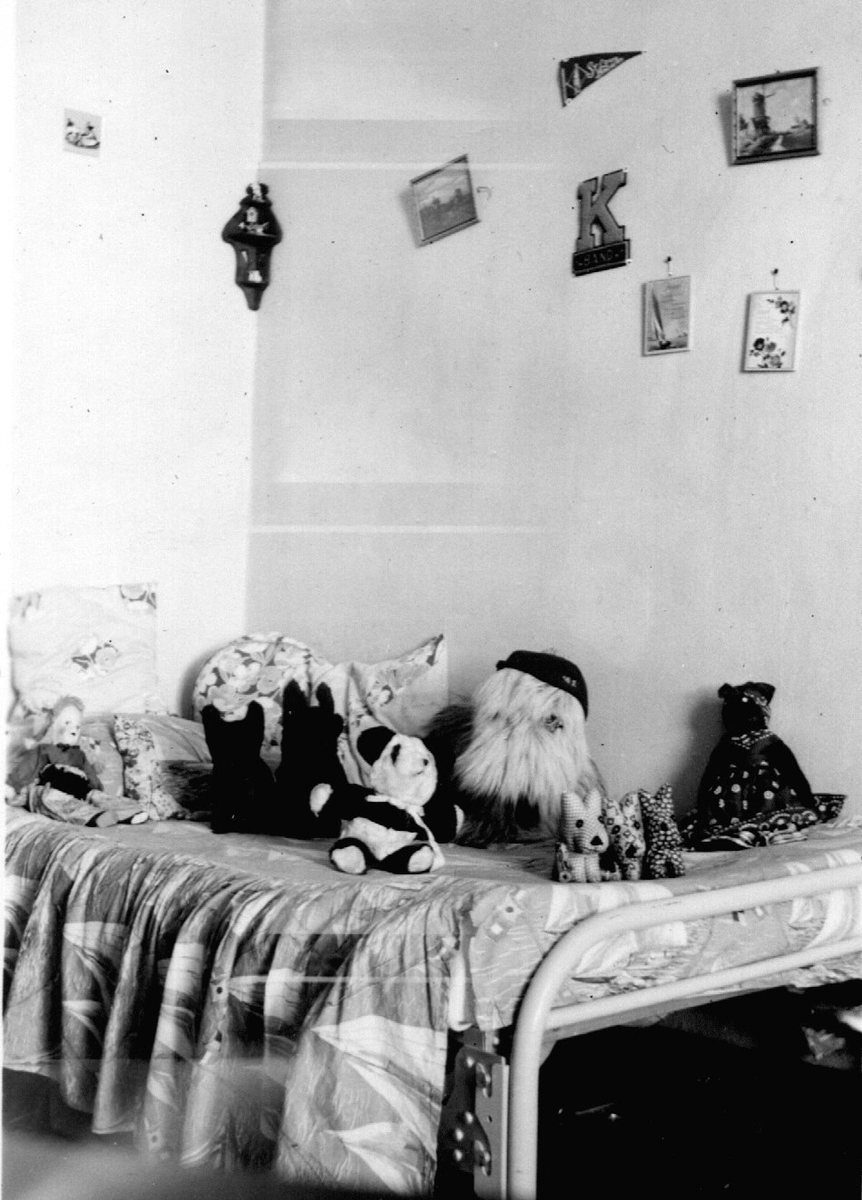
Catherine's dorm room at Kutztown.
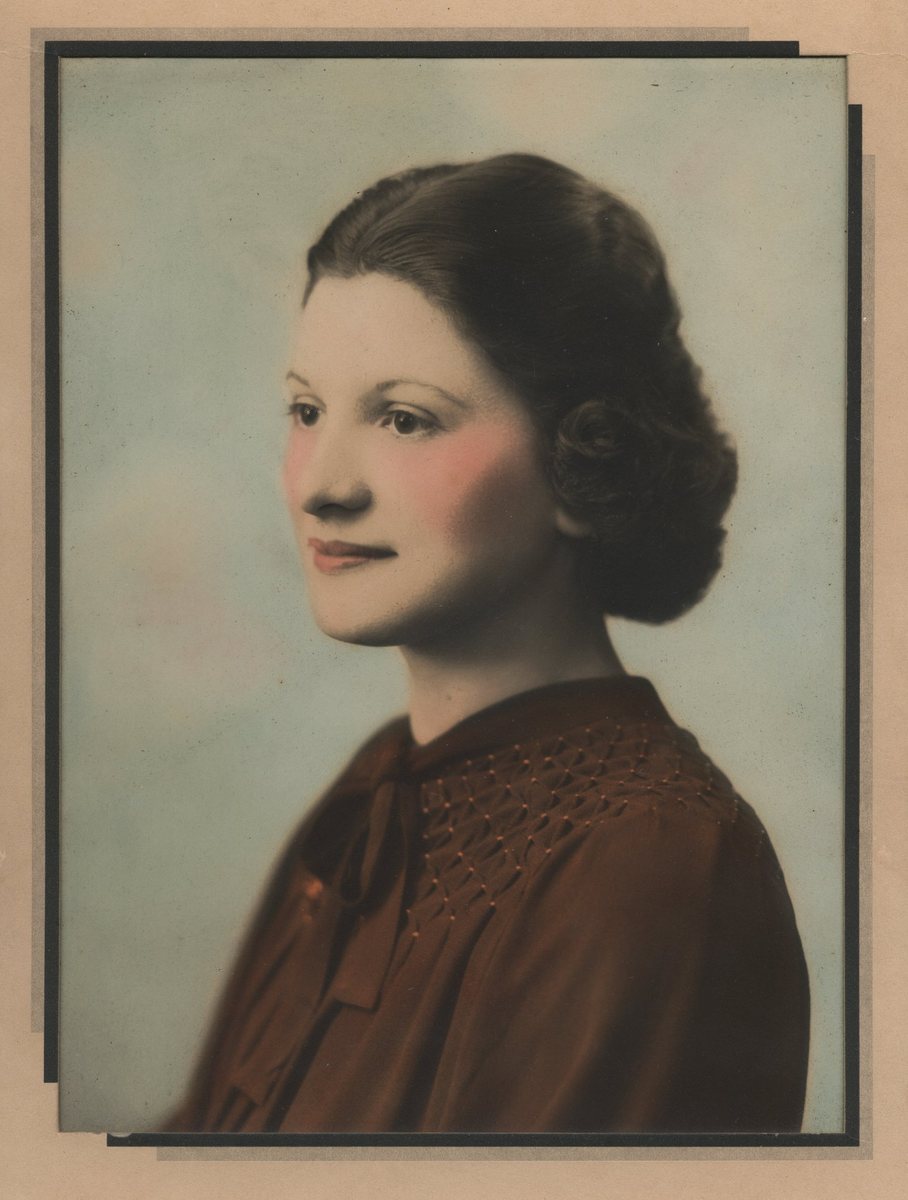
Catherine, a formal portrait from her Kutztown years.
“I think the reason I lived this long was I was well taken care of, because I had a husband that was one of the best in the world. And he lived a long life, too, so I guess we got along well.”
Catherine S. Sweigert
A Husband, A House, A Tree House
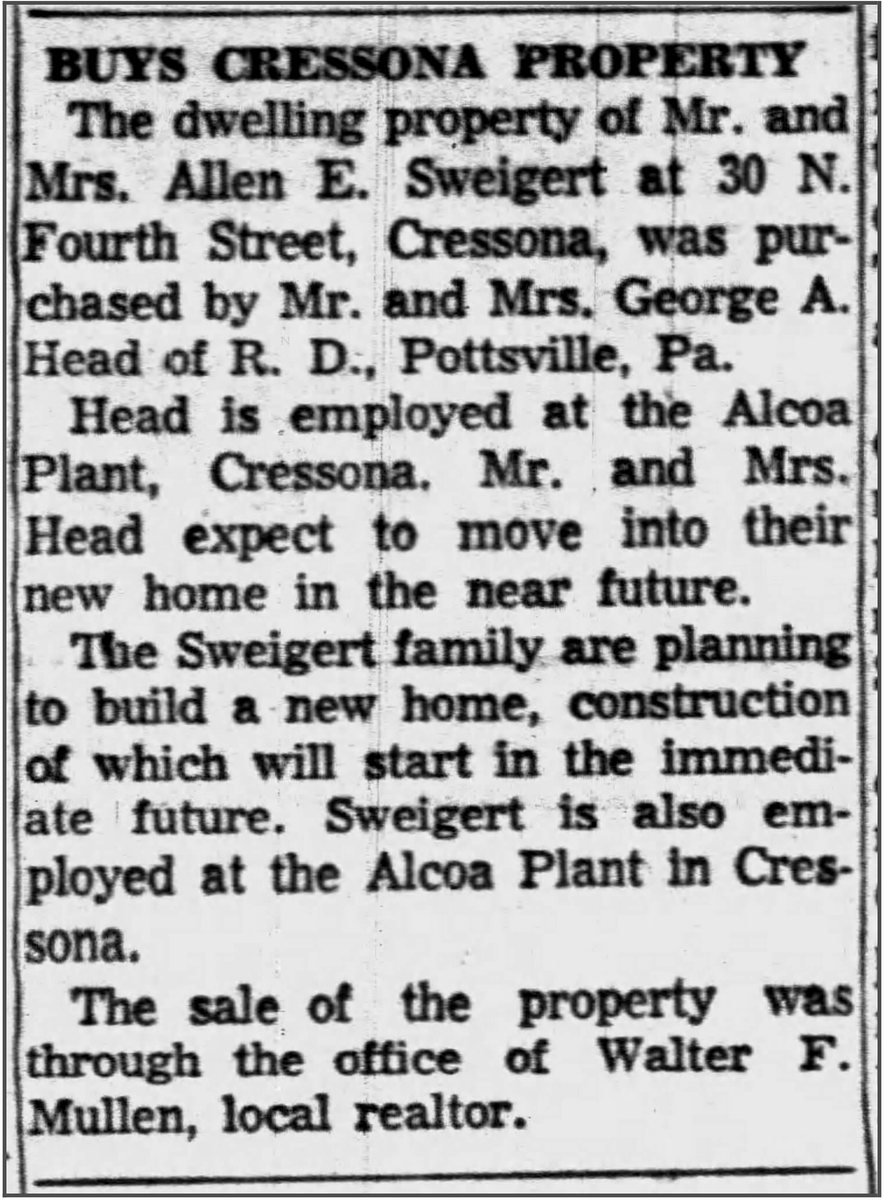
Pottsville Republican, Thursday 29 September 1955. The sale of 30 North Fourth Street — and, in the same paragraph, what it was for. Credit: Pottsville Republican.
J
Jeremy00:00
Okay, there's another question. This one might be mind-boggling, but what do you believe is the secret to your longevity?
C
Catherine00:11
Well, I really don't know, because at one time I smoked, and I'd take a drink once in a while, not often. You like your Yuengling Lager, I believe.
J
Jeremy00:20
Huh?
C
Catherine00:21
I think you like your Yuengling Lager. Yeah, I like that, a little bit. Not a lot. I'm not much of a beer drinker. I like scotch and soda better. Whew! That's heavy stuff. But, I tell you what, I think the reason I lived this long was I was well taken care of because I had a husband that was one of the best in the world. And he lived a long life, too, so I guess we got along well. Yes, we did. He built the house we're in right now. Yes, he built it. He sure did. One Thanksgiving, he was up putting the roof on this house. He and George Strach and Johnny Green.
C
Catherine01:17
And it was a Thanksgiving day, I remember.
J
Jeremy01:20
Let's not forget the second house he built. What was that? Oh, you don't remember?
C
Catherine01:26
He built a three-story house for his grandson. Oh, yes, he did. He built a tree house out back. Oh, that was a while. That was a wild time. That was a wild time.
J
Jeremy01:38
Let's see how many floors we can put on this baby.
C
Catherine01:41
It got pretty high. That was all right. No girls allowed. The word is a lud. Ay, ay, ay. Some of the best times we all had was when we went to the shore. Oh, yeah. We all liked the shore. Going to Wildwood.
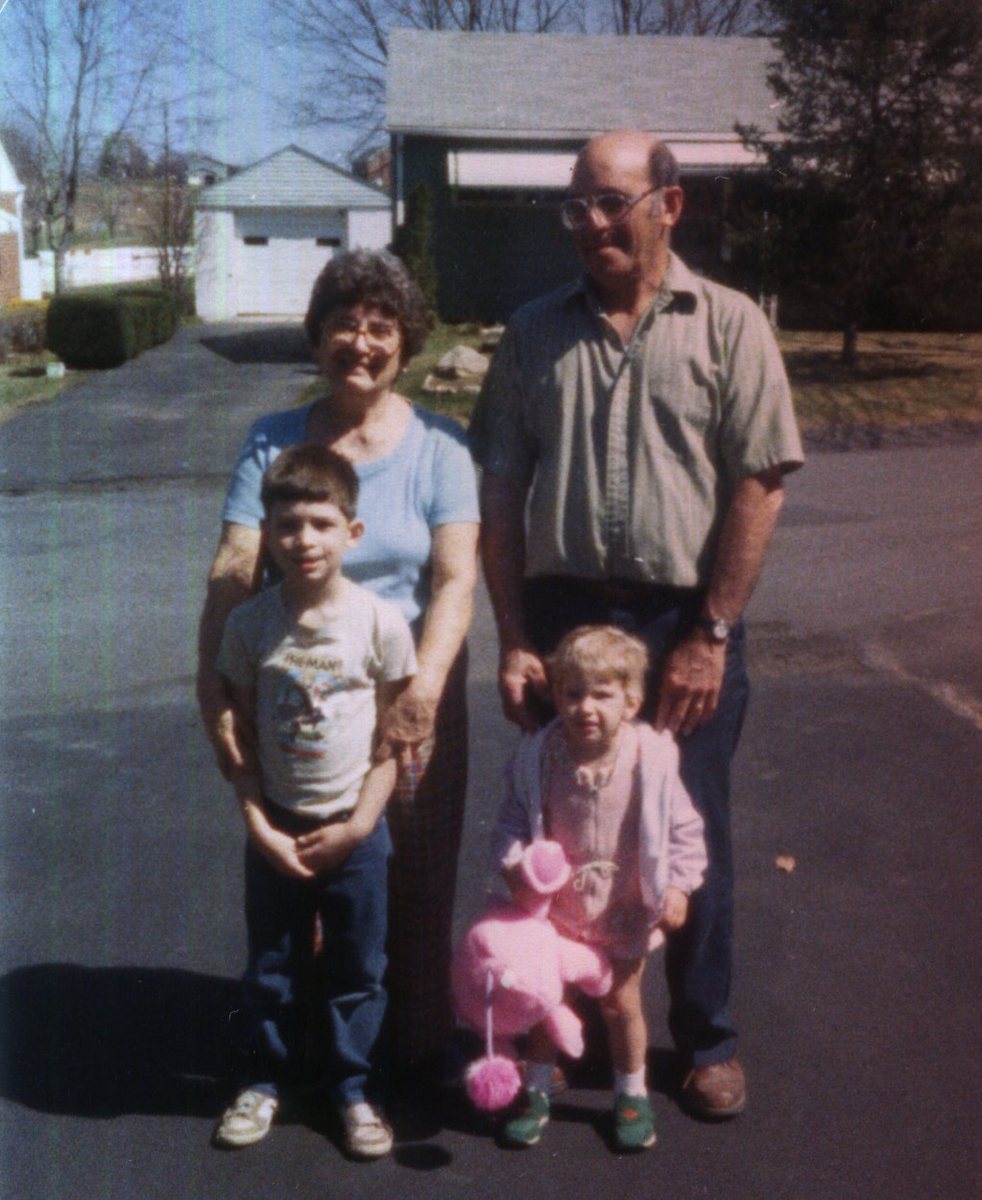
Allen and Catherine with their grandchildren, 1986.
Advice to the Youth Today
Late in the second recording Jeremy put the questionnaire down and asked her something it did not cover: what a woman born in 1919, who spent her working life in a classroom, would say to children now. The passage below runs from there to the end of the tape.
J
Jeremy03:03
All right. Now, we’re going to go completely off interview topic here for a minute. We’re going to ask a question. Now, as you have grown up during what they call the greatest generation, and you were in... You were in... You got to teach children in school. And you see how the world is today. What advice, not just for Braxton your great grandson, but what do you think about how things are in the world today and what the best way is to... Today, with all the distractions, the best path to take to stay on the straight and narrow? In your opinion, if you could speak to the youth today, if you went back to school and you were teaching...
C
Catherine
Listen to your parents, for one thing. And listen and pay attention in school. Kids today do not pay attention. And I could see that that was... When I stopped teaching, I could see it changing then. You could see the change. I wouldn’t venture to give kids advice today because they just laugh, I think.
C
Catherine04:21
And I think this happened... It happened over the years when Mom went to work. Hmm. I think that’s what... My mother never worked. She was at home. My husband’s mother never went to work. She was at home. And I think that made a big difference. We didn’t come home to an empty house or a babysitter. We didn’t know what a babysitter was.
C
Catherine05:01
Kids today have it pretty easy, don’t they? Yeah, I guess. Maybe a little too easy.
J
Jeremy05:08
Well, I probably would have did better in school myself if I wasn’t surrounded by so many distractions.
The speaker labels here are the ones the transcribing software assigned, not anyone’s later judgement. At 05:01 the whole exchange — “Kids today have it pretty easy, don’t they? Yeah, I guess.” — is given to Catherine, though the reply in the middle is almost certainly Jeremy’s. It has been left as the machine heard it rather than quietly corrected. Nothing in this passage came back marked doubtful.
The Philco Dealer for Cressona
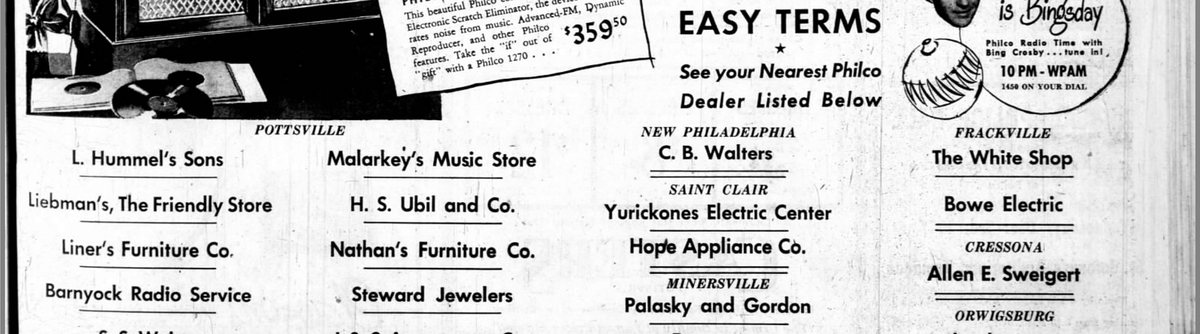
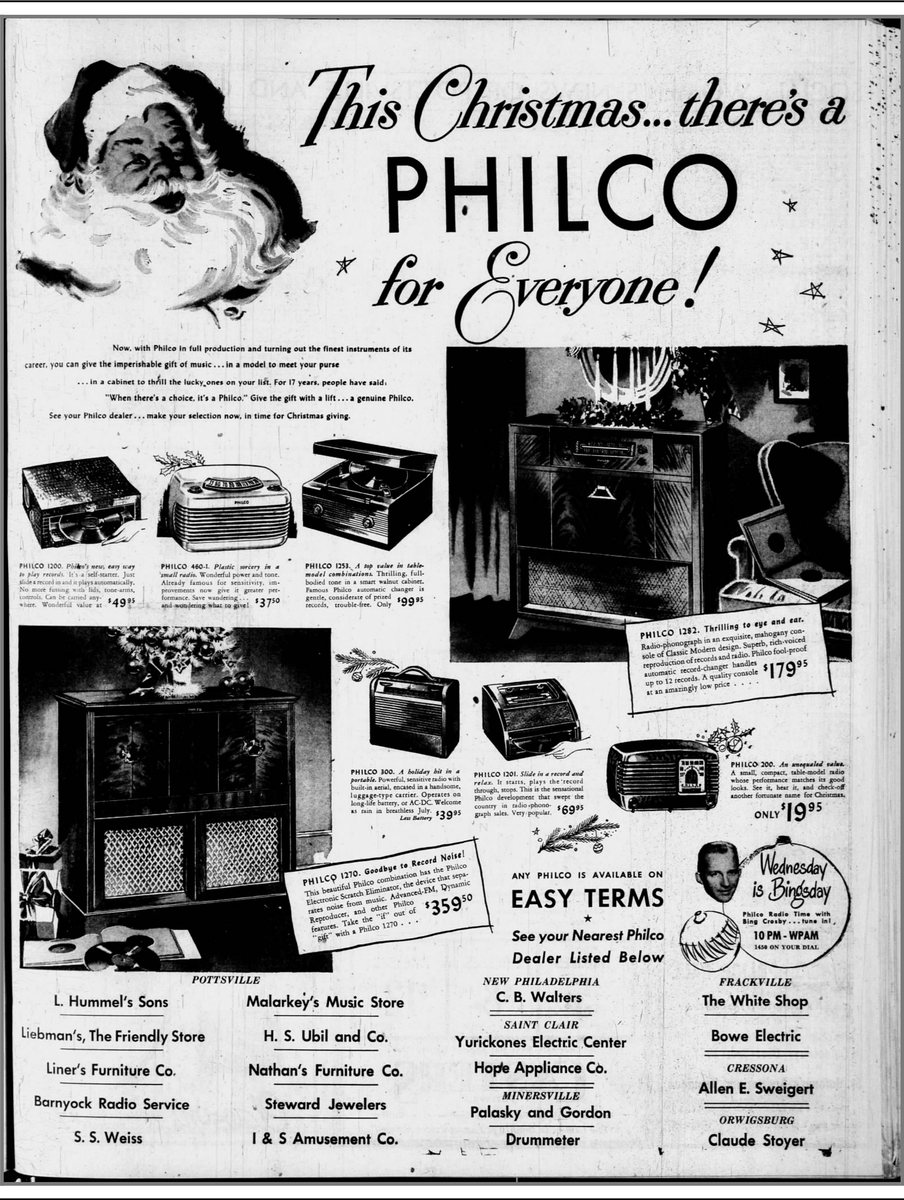
The Army taught him radio, sent him to Scott Field for twenty-two weeks, and then spent his war on it. He went on selling and servicing it under his own name. In December 1947 Philco took a full page in the Pottsville Republican for its Christmas trade, and listed its dealers across Schuylkill County town by town. Pottsville has ten. Saint Clair, Minersville and Frackville have two each. Orwigsburg has one. And under CRESSONA there is a single name, which is his.
The foot of the right-hand column: CRESSONA, and one dealer for the town.
The dealer list entire, from the same page — Philco’s own account of who sold its sets in Schuylkill County that Christmas.
Pottsville Republican, Wednesday 3 December 1947, page 9 — the whole page as it ran. The Philco 1270 at the lower left is $359.50, about four months’ wages for a man in the aluminium works. “Wednesday is Bingsday: Philco Radio Time with Bing Crosby — 10 PM, WPAM, 1450 on your dial.” Credit: Pottsville Republican.
The House, the Dog, and the Years After
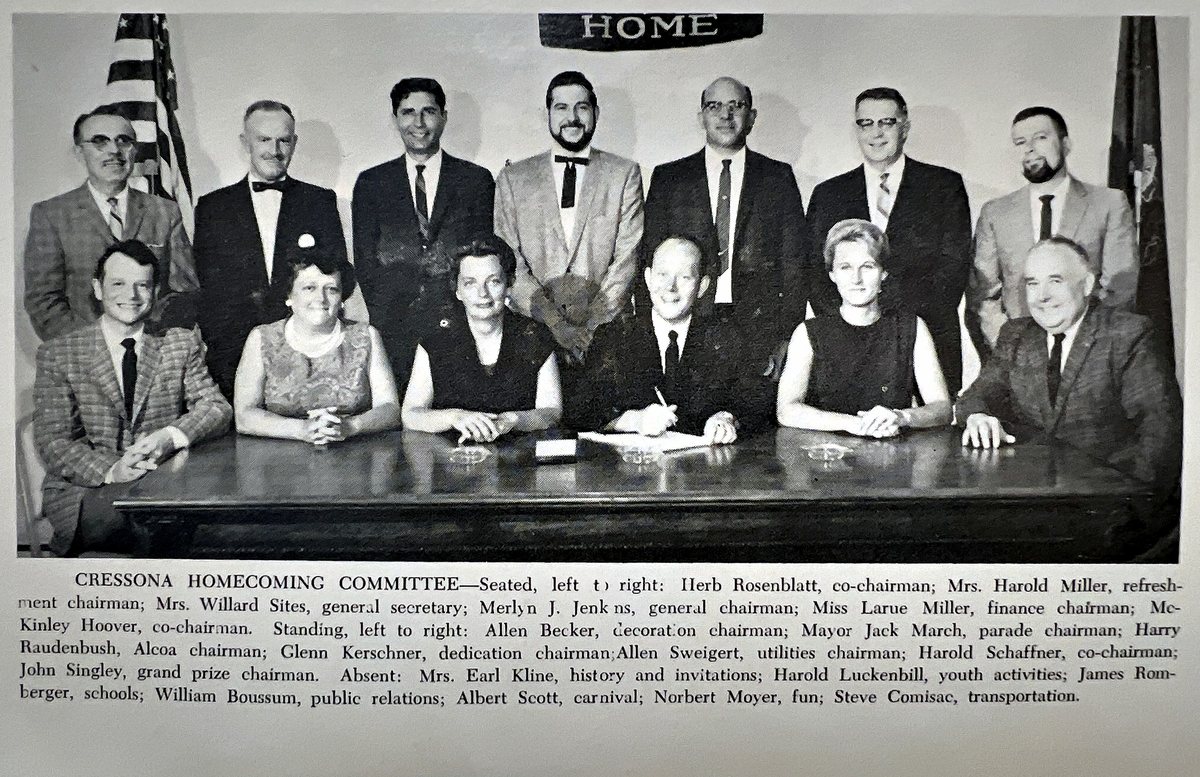
The Cressona Homecoming Committee. Allen stands fifth from the left in the back row, listed in the caption as utilities chairman. About 1969 — the photograph carries no date, and the reasons for that year are set out below.
Allen and his grandson Jeremy, 2001. Five years before the afternoon Jeremy set up a camera and asked him to start at the beginning — the recording this whole document is built on.
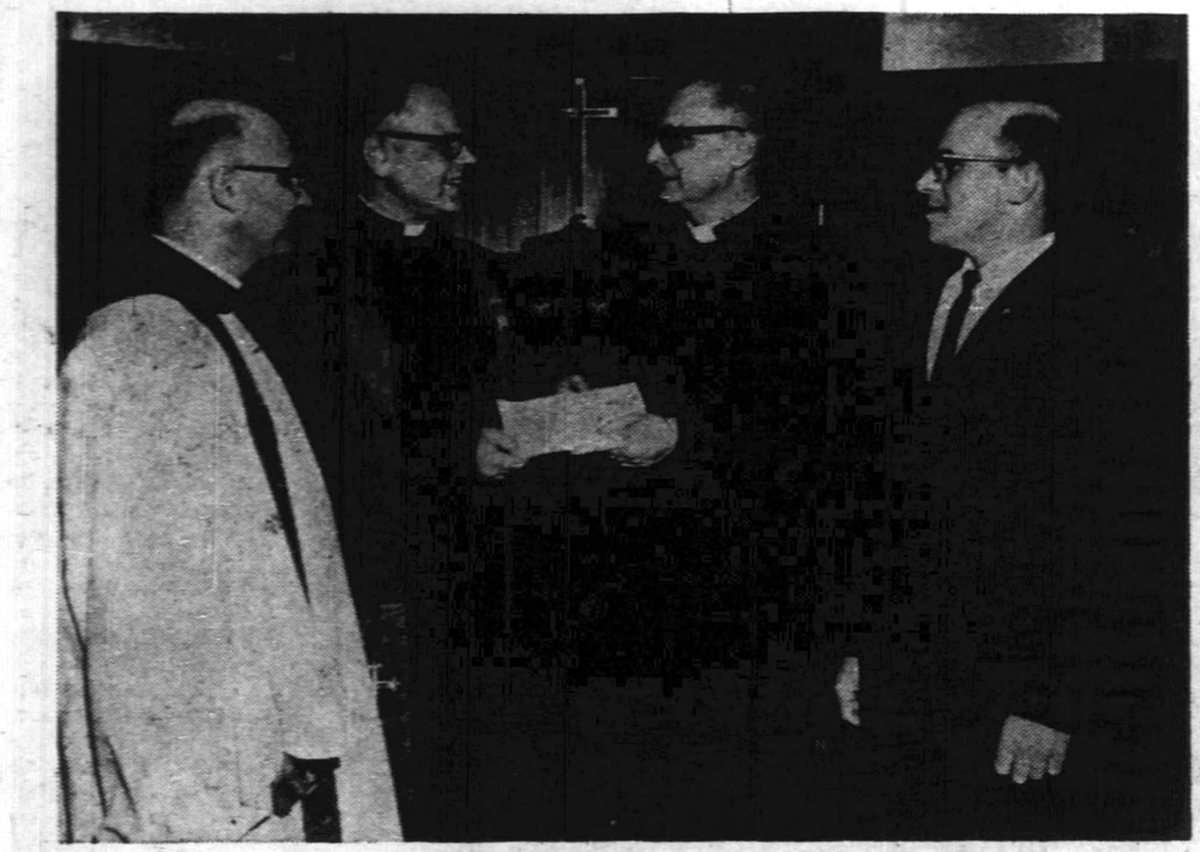
St. Mark’s United Church of Christ, Cressona, Sunday evening 6 March 1966. Allen at the right, the only man in the frame not in clerical dress, at the installation of the minister his committee had called. Identification is by the caption’s left-to-right order.
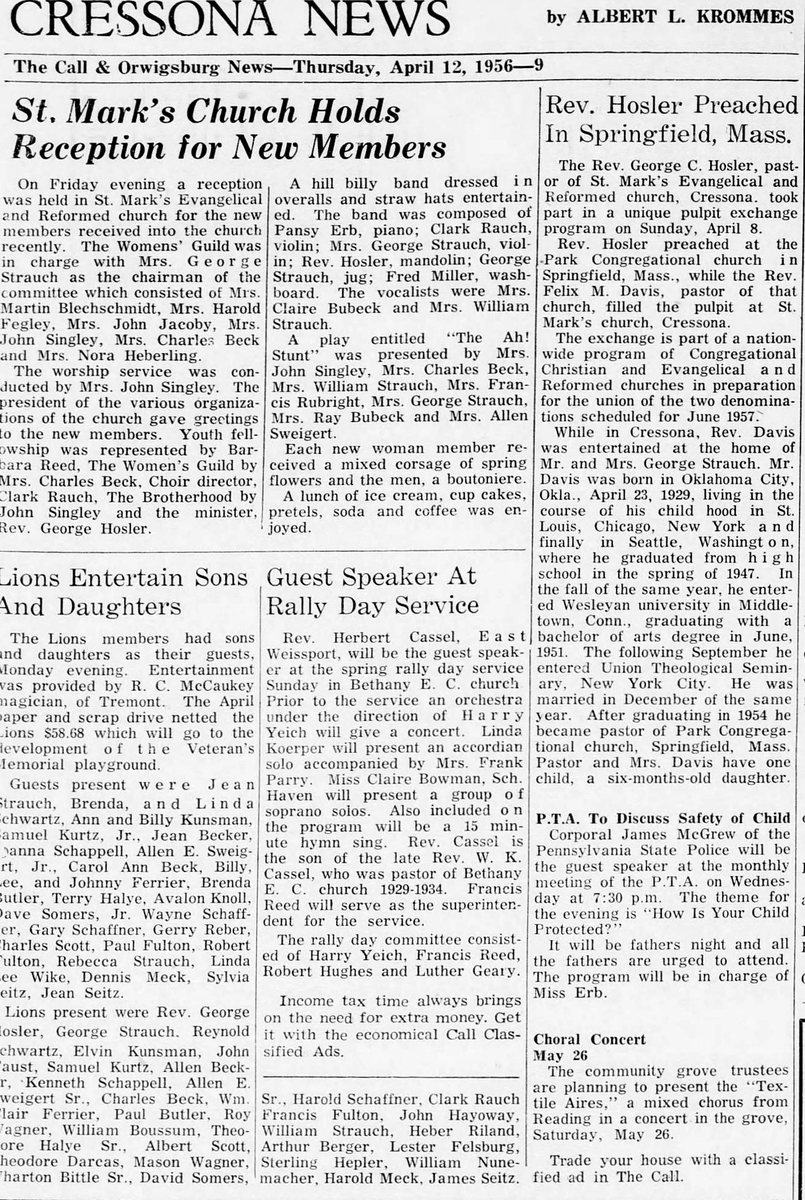
The Cressona News column in The Call & Orwigsburg News, Thursday, 12 April 1956. Allen and Catherine and their nine-year-old son are all on this one page — he at the Lions with Allen Jr. as his guest, she in the cast of a play at St. Mark’s. Credit: The Call and the Orwigsburg News.
“Puppy’s out on the porch. She come running out, jumping all over. … And she hung with me all that night until I went to bed that night.”
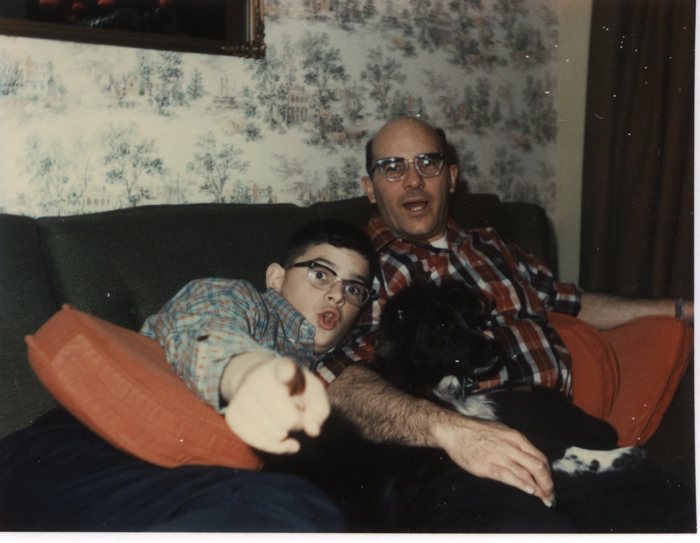
A colour snapshot of two people on a dark green sofa banked with orange cushions: Allen in heavy-framed glasses and a red plaid shirt, and his son John in similar glasses and a blue plaid shirt, with a black-and-white dog lying between them. One of them reaches a hand out toward the camera; the wall behind carries a printed scenic wallpaper and the corner of a gilt picture frame shows at the top left.
Allen, in a crew-neck sweater and wire-rimmed glasses, leaning on a rustic log rail beside Catherine in a short-sleeved buttoned blouse and a checked skirt, her hands clasped in front of her. Dense conifers and hardwoods cover the slope behind them.
A thick-coated dog in a tagged collar stands on the concrete cap of a brick porch pier, the clapboard wall and shuttered window of a house behind it. Its tail is blurred by movement.
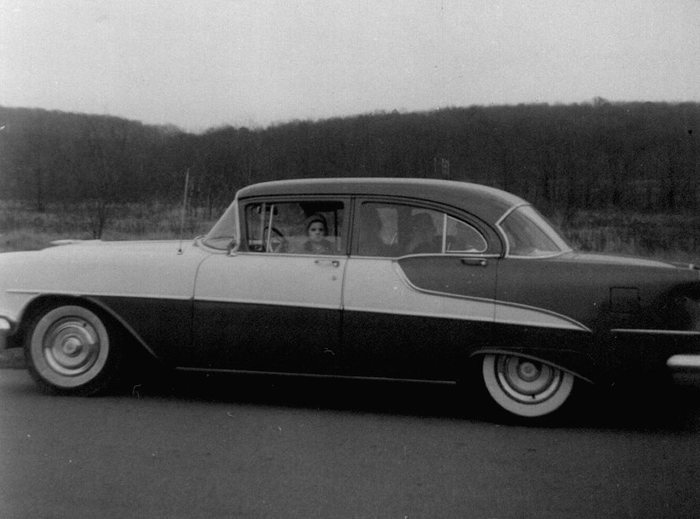
A two-tone four-door sedan with whitewall tyres on a paved road below a wooded ridge of bare trees. John Sweigert, Allen’s younger son, looks out through the front side window, with two further figures indistinct in the back seat.
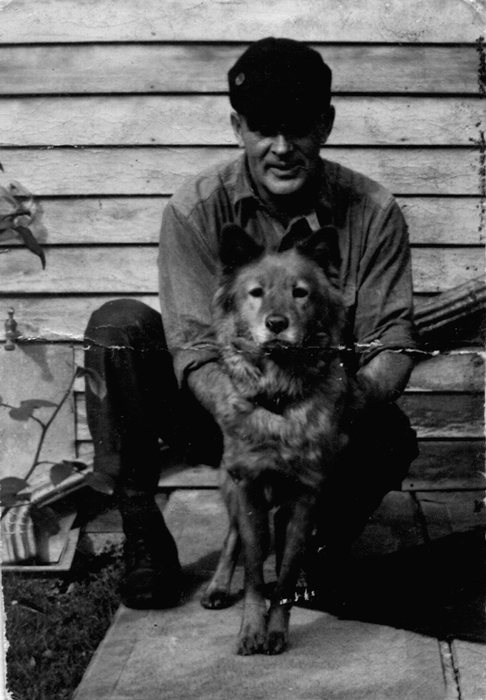
Earl Joshua Sweigert, Allen’s father, in a dark flat cap, a work shirt with the sleeves rolled back, dark trousers and high boots, sitting against the clapboard wall of a house and holding a thick-coated dog steady between his knees. A creeper climbs the wall at the left.
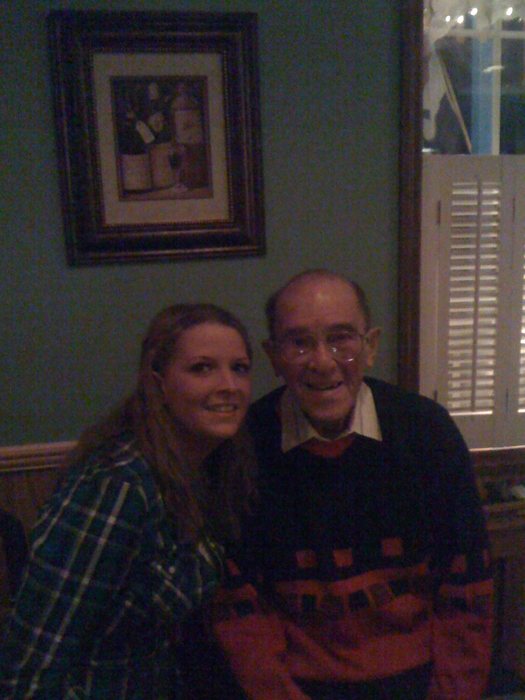
Allen sits cheek to cheek with his granddaughter Jessica in a restaurant, in a red and navy patterned sweater and heavy-framed glasses; she is in a green plaid shirt. A framed still life of wine bottles hangs on the wall above them and white louvered shutters stand at the right.
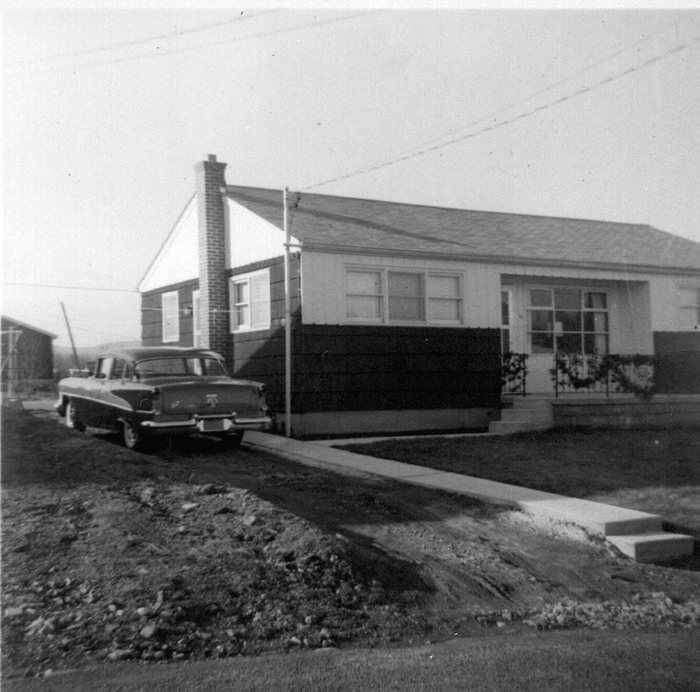
A single-storey house seen from the driveway, with a brick chimney, two-tone siding, a shingled roof and a decorated front-porch railing. A two-tone sedan is parked on the drive, the concrete walk and steps are newly poured, and mounded bare earth fills the foreground.
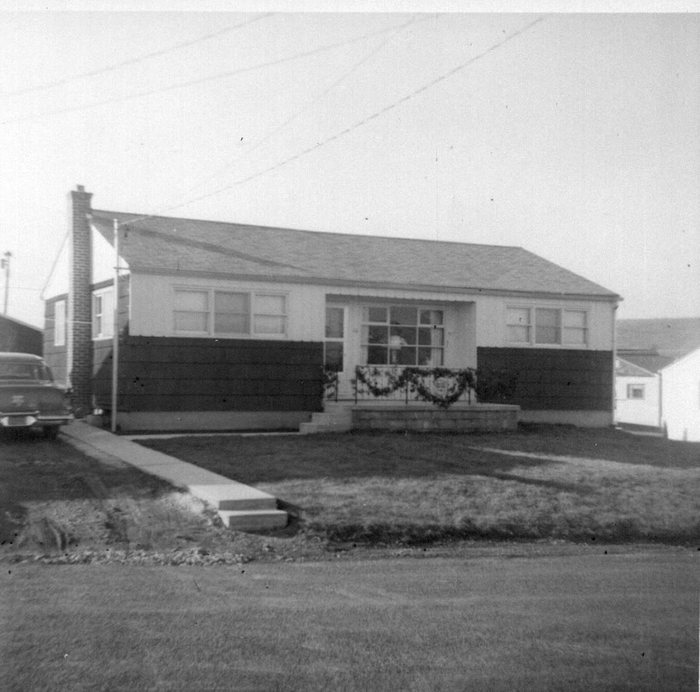
The front of the same low house from across the street, evergreen garland swagged along the porch railing with a pale ornament in each loop and the front of a car cut off at the left edge. The new concrete walk runs down to two freshly poured steps set in raw earth and gravel at the street.
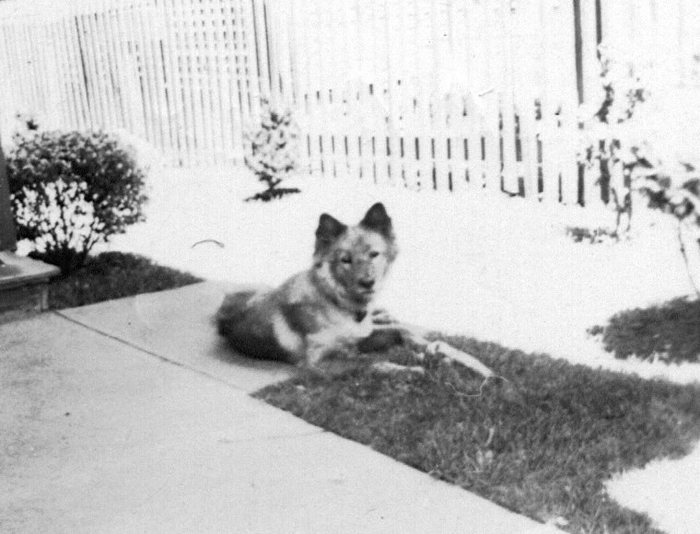
A thick-coated dog lies at the edge of a concrete walk with both forepaws over a large bone, a picket fence and a flowering shrub behind it.
The Borough Cemetery, and Twenty Years On Its Commission
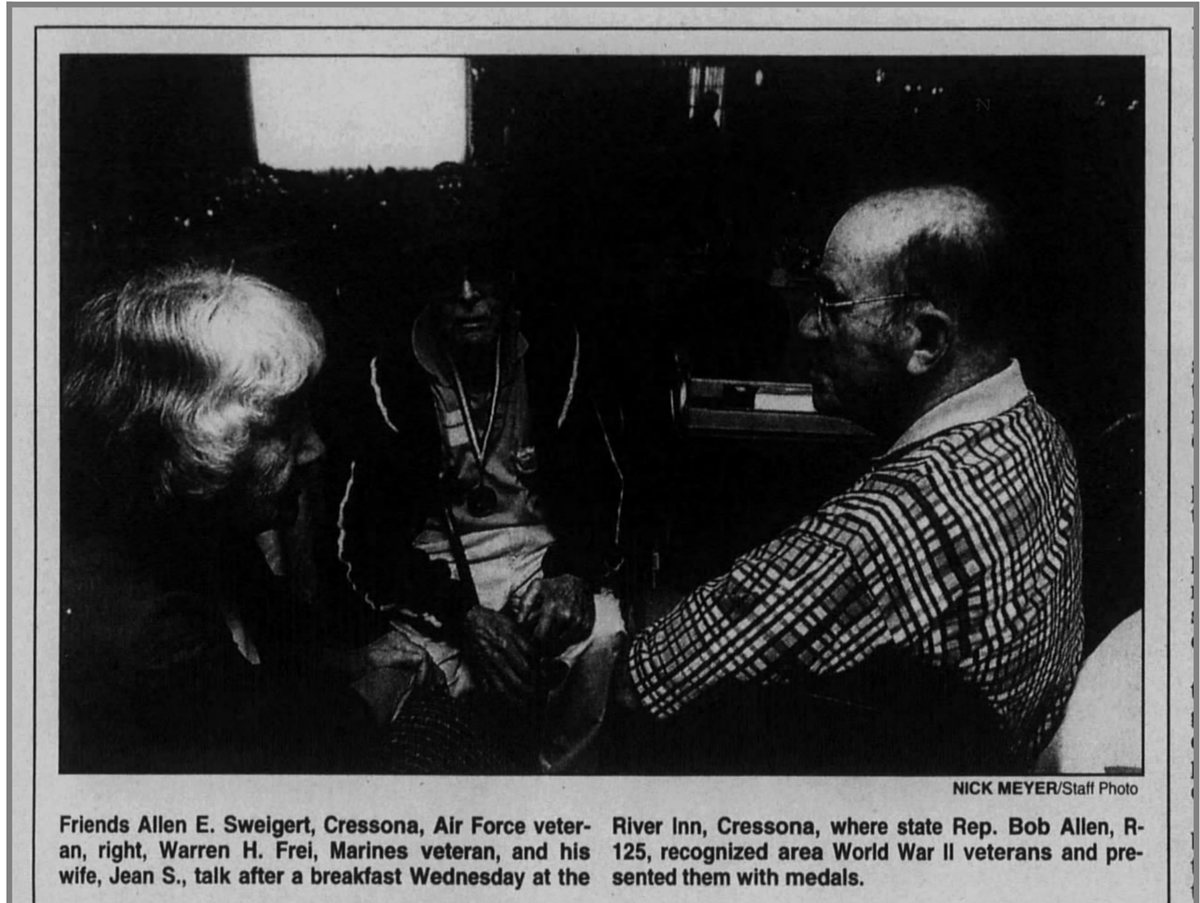
Republican & Herald, Thursday 23 September 2004. Allen at eighty-six, right, with Warren H. Frei and his wife Jean S., after a breakfast at the River Inn, Cressona, where the county’s surviving World War II veterans were recognised. Photograph by Nick Meyer, staff.
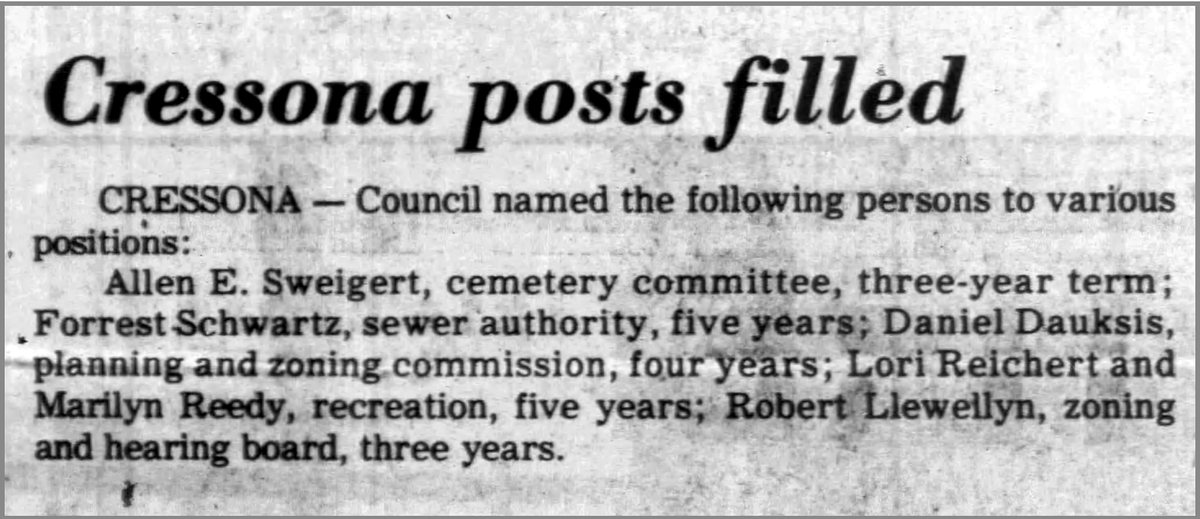
Pottsville Republican, Friday 5 February 1982 — the item that will not fit the twenty. He was already on the cemetery committee two years before a 1984 start would allow. Credit: Pottsville Republican.
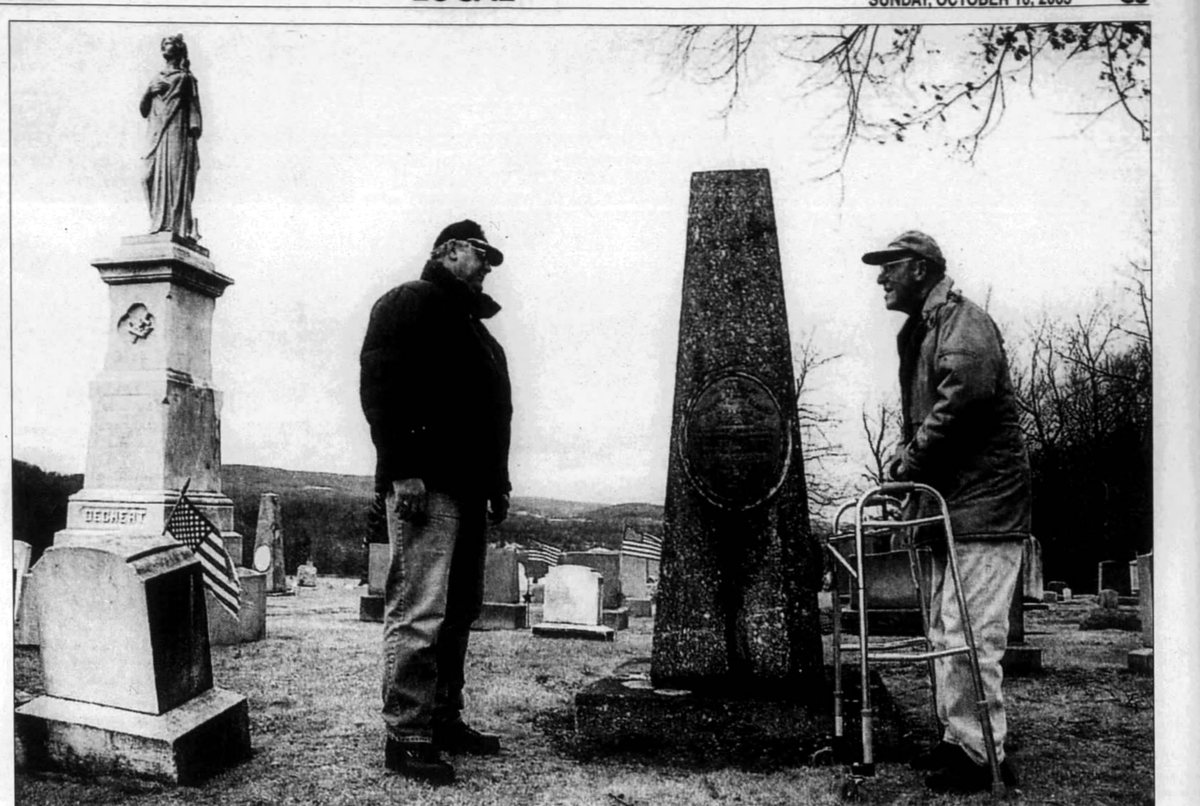
In October 2005, when he was eighty-seven, a reporter from the Republican & Herald came to Cressona to write about the borough’s cemetery, and the man she quoted at length was Allen. He had sat on the three-person commission that ran it for twenty years, and had stepped down the year before. He never mentioned it on the tape, and his obituary does not mention it either: that lists the church, the Lions, the American Legion and the police pension committee, and leaves the cemetery out.
Cressona Cemetery, October 2005. Allen, right, at eighty-seven and on a walker, with Robert A. Barr, borough council president, at one of the earliest graves in the ground — that of Theodore Alexis Classen, a native of Finland, from 1855. Allen had come off the cemetery commission the year before, after twenty years on it. Photograph by Jacqueline Dormer, Republican & Herald.
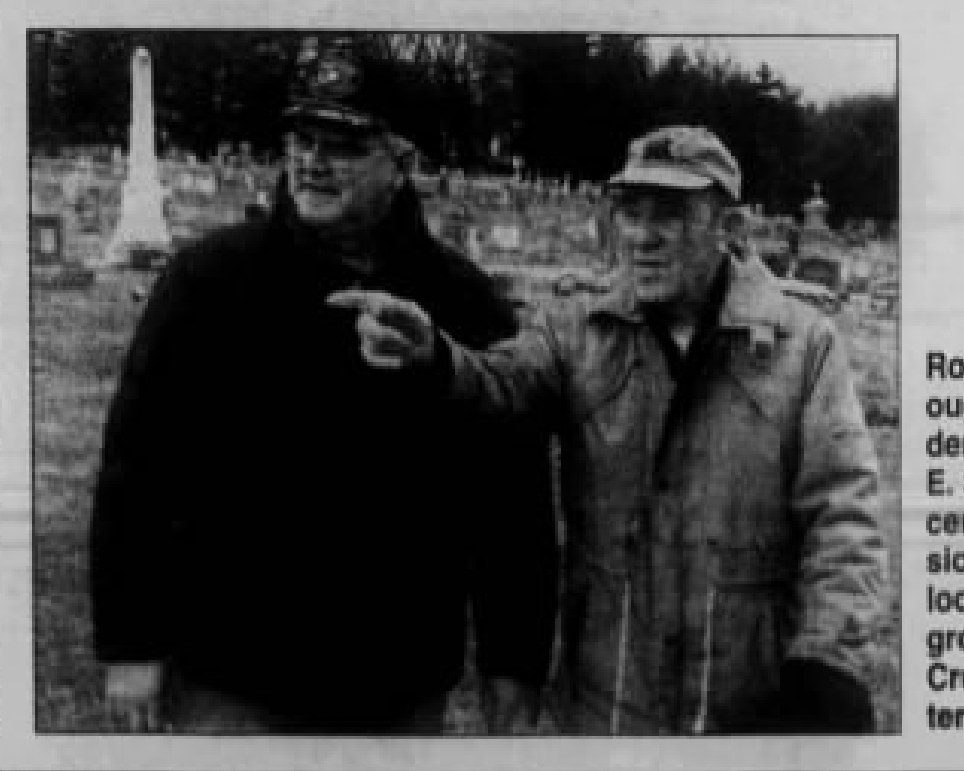
Cressona Cemetery, October 2005. Allen at the right, reaching across to point something out, with Robert A. Barr, the borough council president, beside him. The paper’s own caption reads: “Robert A. Barr, borough council president, left, and Allen E. Sweigert, retired cemetery commission member, right, look over the grounds at the Cressona Cemetery.”
“I hear the people talk about our cemetery. All the people in Cressona are proud of it.”