About This Chapter
llen told his story from memory, sixty-four years after it happened, with no notes in front of him. This chapter is what happens when you take him at his word and then go looking. Nearly everything he says that can be checked, checks — the dates of his crossing, the Dutch markings on his first aeroplanes, the way the Port Moresby strips were named, the ranking of malaria as the theatre’s worst enemy, the reclamation depot he worked at for a fortnight after the war. Where the record corrects him, it is almost always on a detail he had already hedged himself.
Each note below is keyed to something he actually said. Every claim in them was researched on its own and then handed to a second reader whose only job was to knock it down; anything that reader could not corroborate was cut or rewritten rather than quietly left in. Where a note is marked likely, it rests on a reading of the evidence rather than on a document that says so outright — and it will tell you as much in its own words.
Two things are worth saying plainly. Where a fact belongs to the 3rd Bombardment Group as a whole, it is credited to the group rather than to Allen’s own 90th Squadron: the two are not the same, and what survives for the squadron is much the thinner record of the two. And where Allen himself is the only source, you will be told so — a mission that never flew, or an aerial strung between two trees against regulations, leaves no paperwork behind.
The Ship, and the Road Inland
This drawing, set out in words
- San Francisco, where Convoy 2030 cleared on 31 January 1942 with the USAT Ancon among its transports. He was promoted corporal somewhere at sea.
- Brisbane, where the Ancon docked on 25 February 1942 — twenty-five days.
- Charters Towers, inland to the north-west, where the 89th and 90th Squadrons entrained on 8 March.
- The arc is drawn dotted and labelled as a geometric assumption. The convoy's actual track is not recorded anywhere in this collection, and no distance is computed from it.
- A filled disc marks a place he is documented to have been. An open square marks a place documented for his unit rather than for him. An open square with a diagonal tick marks his own squadron. A dashed circle marks a place that is inferred rather than recorded.
- A brass ring crossed by a bar marks a place he never stood on — a target, or somewhere his group went without him. Each carries the words HE WAS NOT THERE.
- A solid line is a journey whose means of travel is recorded. A dashed line is a move that is documented while the means is not. A dotted line rests on his own account alone.
- No plate carries a computed distance. His own “about 12,000 miles” already stands here against a measured 9,500 to 10,200, and a third figure, quietly worked out, would only muddy the water.
He never knew the name of the ship he crossed on, or why half the convoy vanished overnight. Both are on the record.
His Own Letter Home, May 1942
Everywhere else in these pages, Allen’s voice comes from a recording made in 2006, when he was eighty-seven, remembering across sixty-four years. Not here. The Call of Schuylkill Haven — the paper a Lions Club was posting out to him in Australia — asked him for news, and he sat down and answered. It is the only thing in the collection he wrote at the time.
Somewhere in Australia,
May 19, 1942
To “The Call”:
First of all I want to express my appreciation to the Lions Club for having The Call sent to me. I certainly do appreciate it. It sure feels good to get the paper from around home, especially when you are about 12,000 miles from home. The mail doesn’t come very often but when it comes there is always a few Calls among it.
We had quite an interesting trip over here but I can’t tell about it. At present we are very busy with our work. I can’t tell you what we are doing but we’re right in there giving a good account of ourselves.
As for the information you asked for, I have had two promotions since I left the States. I was promoted to Corporal aboard ship somewhere in the Pacific and recently I was promoted to Sergeant and Air Mechanic First Class in radio operating and maintenance.
Previous to my service in the Air Corps I was with the 213th Coast Artillery and was inducted into federal service with that unit. It was while encamped with this unit at Camp Stewart, Ga., that I joined the Air Corps. Since then I have graduated from the Air Corps technical schools at Scott Field, Ill., on Oct. 27, 1941, and participated in the army maneuvers in the Carolinas last fall.
The most popular times here are when the mail comes, chow and the broadcasts each night from San Francisco and New York. We manage to get to a town once in a while to the movies.
The people here are very friendly and we get along fine with the Aussie soldiers that we come in contact with.
Give my regards to the boys of Btry. “F”, 213th. The last time I seen the old gang was on Dec. 7th when I visited Camp Stewart the day before war was declared.
You will be interested to know that there are three Schuylkill Haven men here where I am. Sgt. Milton Kramer, Sgt. Thomas Maberry and Sgt. Edwin Yerger, and they are all O. K. and send their regards.
Thanks again for the news from home.
Sgt. Allen E. Sweigert.
Printed under the standing head “Shots from Camp” in The Call, Schuylkill Haven, Pennsylvania, 12 June 1942, page 1. End-of-line hyphens forced by the column measure have been closed up; every other mark, including the grammar, is as set. Nothing on the clipping is illegible.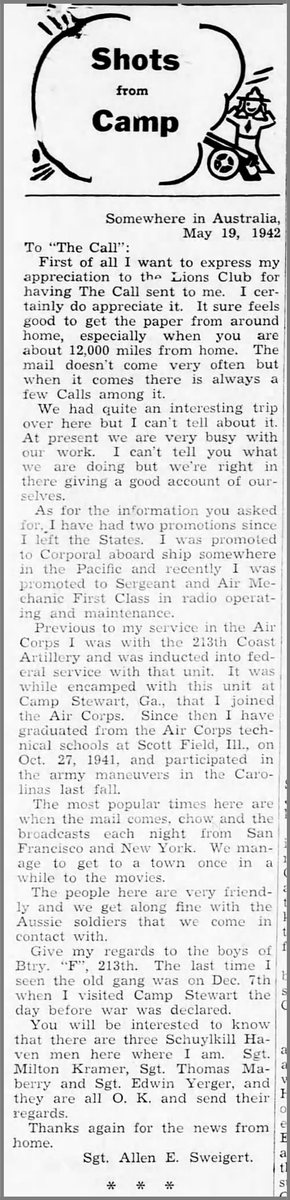

Standing By for the Coral Sea
A pre-dawn call, a ten-minute gunnery course, and three days beside an aeroplane waiting for a mission that a sea battle cancelled.
The Airfields, Counted in Miles
The airfields around Port Moresby, about five units apart at the scale of the map above. Both are drawn and neither is chosen, because nobody wrote down which of the two was his.
This drawing, set out in words
- Port Moresby on the southern coast, the group's station from 28 January 1943.
- The Owen Stanley Range between Moresby and the north coast. Two of the six radio men in his section died crossing it.
- Dobodura, on the north coast, where the 90th Squadron went on 21 May 1943.
- Nadzab, up the Markham Valley, where the 90th flew on 30 January 1944.
- Hollandia, at the far north-west, from May 1944.
- Wewak, Rabaul and the Bismarck Sea are marked as places he never stood on.
- Dulag, on Leyte, lies off this panel to the north-west. His group went there on 16 November 1944, ten weeks after he had gone home.
- A filled disc marks a place he is documented to have been. An open square marks a place documented for his unit rather than for him. An open square with a diagonal tick marks his own squadron. A dashed circle marks a place that is inferred rather than recorded.
- A brass ring crossed by a bar marks a place he never stood on — a target, or somewhere his group went without him. Each carries the words HE WAS NOT THERE.
- A solid line is a journey whose means of travel is recorded. A dashed line is a move that is documented while the means is not. A dotted line rests on his own account alone.
- No plate carries a computed distance. His own “about 12,000 miles” already stands here against a measured 9,500 to 10,200, and a third figure, quietly worked out, would only muddy the water.
Allen remembered the Port Moresby strips by their distance out the road. Every number he gave is a real airfield.
Where He Turned for Home
The last leg, and the campaigns that belong to his war rather than his group’s.
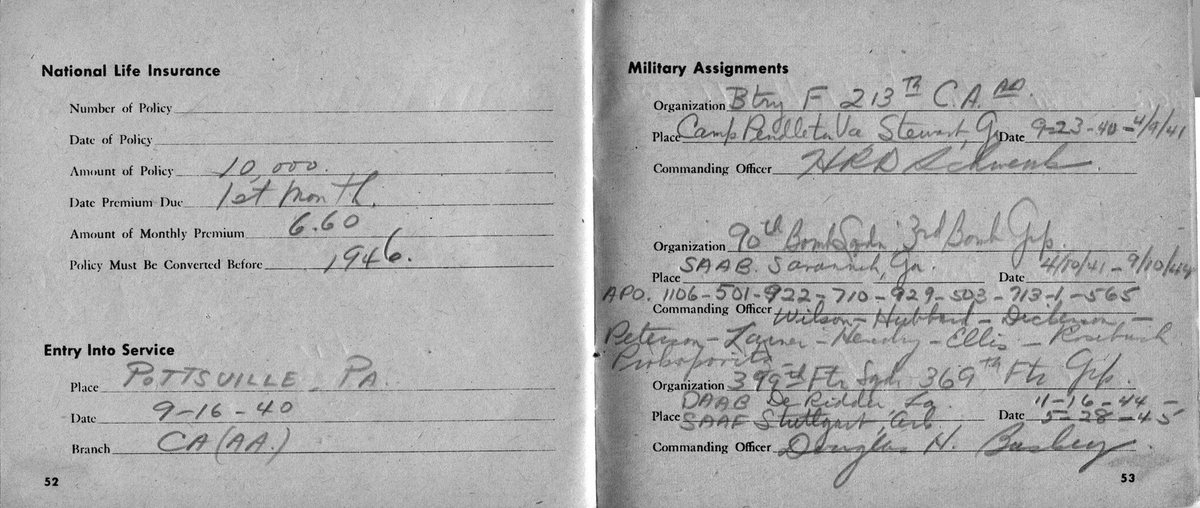
Decoding His APO Numbers
Eight numbers in his own handwriting, each standing for a place he was forbidden to name. Seven of them decode.
| In his hand | Where it stood for | Dates in the Army register | Note |
|---|---|---|---|
| APO 1106 | Not in the register | — | No APO 1106 exists in the Army Postal Service’s master list of every number used between 1942 and 1947. Either it is not an APO at all, or it is a slip of the pen. |
| APO 501 | Theatre headquarters, Australia | Melbourne 1/42 → Sydney 9/42 → Brisbane 2/43 | A theatre-level address rather than a place — what a newly landed man could give his family before he was on any base roll. |
| APO 922 | Townsville, Queensland | opened 18 March 1942 | The port town he passed through, and the nearest large postal facility while the group was settling into the scrub inland. |
| APO 710 | Charters Towers, Queensland | 17 Sept 1942 → Townsville 29 April 1944 | His own base — but with no post office of its own for his first six months there, which is why 922 comes before it on his list. |
| APO 929 | Port Moresby, New Guinea | opened 23 July 1942 | The V-mail plant he describes ran under this number. |
| APO 503 | Oro Bay, New Guinea | Melbourne 1/42 → Sydney → Townsville → Oro Bay 1/43 | The deep-water port some twenty miles from Dobodura, and the reason Dobodura could be supplied at all. A surviving 3rd Attack Group address reads “Hq. 3rd Atk Gp, APO 503.” |
| APO 713-1 | Lae, New Guinea | Oro Bay 18 Aug 1943 → Lae 9/43 | Lae sits at the mouth of the Markham; Nadzab lies about twenty miles up the same valley. The “-1” is most likely a branch office — an inference, not a record. |
| APO 565 | Hollandia, Dutch New Guinea | Goodenough Is. 1/44 → Hollandia 28 April 1944 | Base G. The number on his last letters home from the Pacific. |
The Nervous System of a Squadron
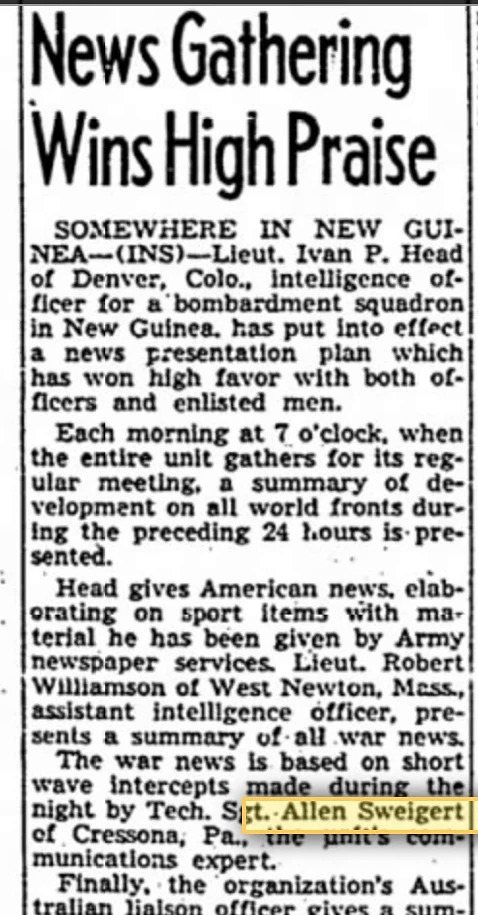
What a communications chief actually worked with — and the aerial he strung against the rules, which worked better than the one in the manual.
Malaria, Mud and Bully Beef
“Malaria was our greatest enemy.” The Army agreed with him, in numbers.
Raids, and the Joker Who Circled
A hundred aircraft overhead before anyone looked up, and the lone night visitor nobody was allowed to shoot at.
The Last Peacetime Autumn
November 1941, in the Carolina pines.
The Mood of the Captor
The hardest remark in the interview, answered plainly.
The Censor, and the Stamp
What the handstamps on the backs of his prints actually certify — and what they cannot.
His Own Camera, and the Group Darkroom
How a communications sergeant came home with hundreds of photographs.
The Mountains, and the Maps They Did Not Have
“New Guinea is a funny place when you try to come over the mountains.” Two of the six radio men in his section died doing it.
Rockhampton, and Twenty-One Men in a Mitchell
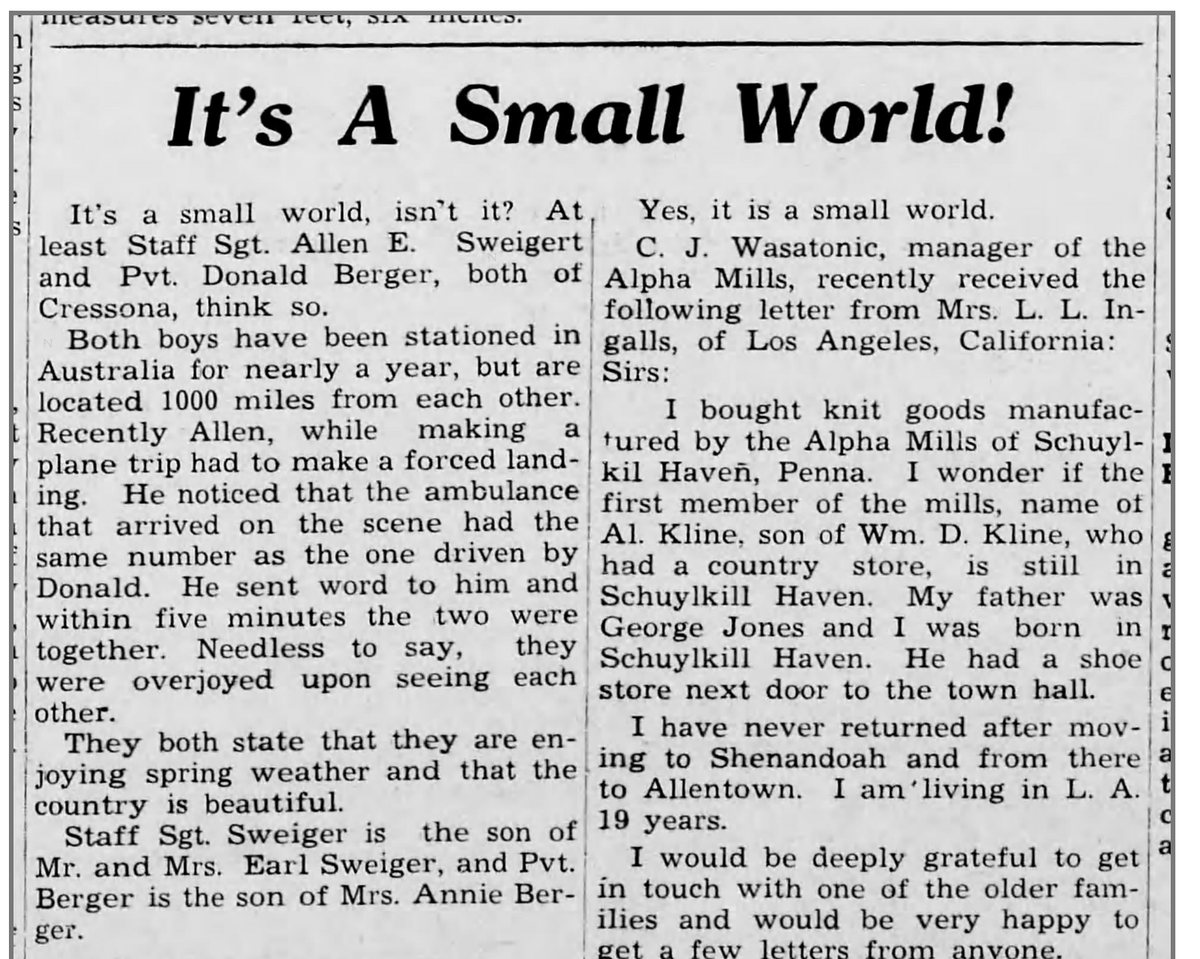
A collapsed nose wheel, an overloaded aeroplane, and a cousin recognised from the markings on an ambulance.